

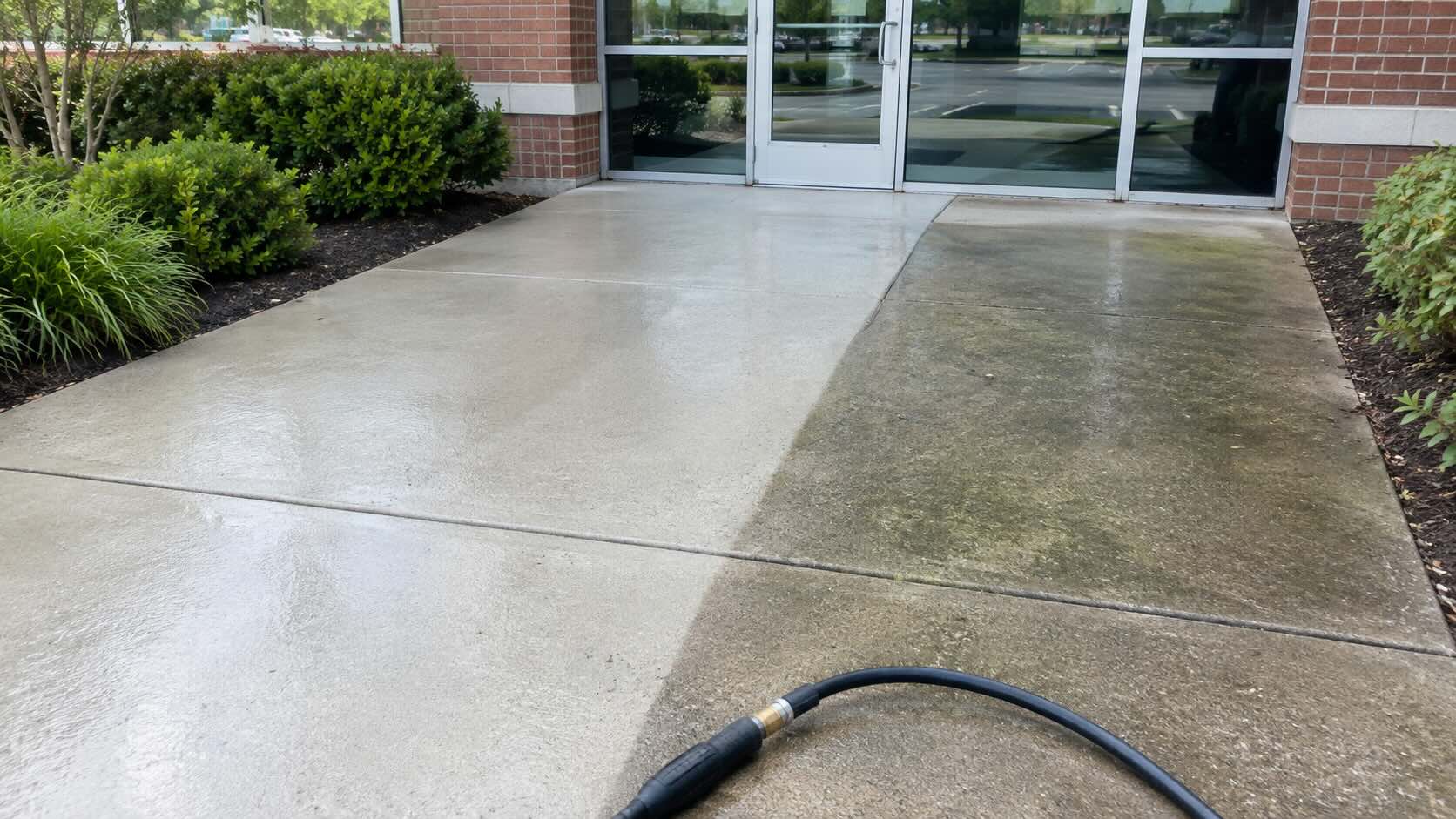
Professional commercial power washing can make a storefront’s first impression match the care you put into the business behind it. Customers and tenants notice the details up close: darkened concrete, gum near the door, algae along a shaded walkway, or stains around a dumpster enclosure. For property managers, those same areas can become recurring maintenance concerns.
Professional commercial power washing addresses that buildup, but a useful cleaning plan involves more than choosing a machine and spraying every surface. We look at what caused the staining, what the surface can tolerate, how people use the property, and where the wash water will go. That approach matters whether we are cleaning one restaurant entrance or coordinating work across a larger Harford County commercial site.
This guide explains what commercial exterior power washing can cover, how we choose methods, what affects scheduling and cost, and what property owners should settle before work begins.
What Professional Commercial Power Washing Covers
Professional commercial power washing uses specialized equipment and cleaning methods to remove buildup from exterior surfaces. Depending on the job, that may involve controlled water pressure, appropriate cleaning solutions, dwell time, agitation, or a lower-pressure wash. “Power washing” is a useful general term, but it should not imply that every part of a building receives the same treatment.
We provide exterior cleaning for offices, retail storefronts, warehouses, restaurants, apartment complexes, and other commercial facilities in Harford County. Common work areas include building exteriors, sidewalks, entryways, parking areas, loading zones, and dumpster pads. We handle both one-time projects and recurring maintenance.
Building exteriors and storefronts
Walls and storefronts collect different kinds of buildup. A shaded section may develop algae, while a street-facing wall gathers dust and vehicle residue. Around a restaurant entrance, splashes and frequent foot traffic create another cleaning pattern altogether.
Before washing, we identify the material, its condition, and any vulnerable details. Painted finishes, mortar joints, sealants, signs, exterior lights, outlets, and door hardware all deserve attention. The goal is to remove buildup without treating a delicate façade like a concrete loading pad.
Sidewalks, steps, and entrances
Entrances carry the highest expectations and often receive the heaviest wear. Foot traffic presses dirt into textured pavement; gum and spilled drinks leave localized marks; shaded sections stay damp longer and may develop organic growth. Exterior steps and walkways also need careful scheduling because people may continue using the building during cleaning.
We pay attention to the full route people take, not just the patch immediately in front of the door. Cleaning an entrance while leaving the adjoining sidewalk visibly dirty can make the result look incomplete.
Parking areas, loading zones, and dumpster pads
Vehicle areas introduce soil, tire marks, sediment, and occasional fluid stains. Loading zones may also hold pallet debris or residue from routine deliveries. Dumpster pads present a different challenge: leaked liquids, food waste, and grease can make them unpleasant to use and more complicated to clean, making a professional commercial power washing treatment all the more important.
These areas call for a site-specific plan. We first identify what needs removal, where nearby drains lead, and whether the work requires wash-water containment. Pressure alone is not a substitute for managing grease, debris, or contaminated runoff.
Apartment and managed-property common areas
At an apartment complex or other managed property, cleaning may involve breezeways, shared walkways, building entrances, curbs, and common-use concrete. Residents still need reasonable access while the work takes place. We plan the sequence of cleaning around occupied spaces and identify areas that may need temporary closures or notice.
For multi-building properties, it helps to define the scope building by building. That gives the manager a practical way to coordinate access, communicate with residents, and check completed work.
Why the Method Matters
A commercial property rarely has just one exterior material that requires professional power washing. Concrete, brick, siding, painted surfaces, metal, glass, and decorative finishes may sit within a few feet of one another. The stain on each may have a different cause. Effective cleaning starts by matching the method to both the material and the buildup.
Pressure, water, and cleaning solutions
Higher pressure is not automatically better cleaning. On suitable hard surfaces, controlled pressure can help lift embedded soil. On more vulnerable materials, excessive force can damage a finish, disturb a joint, or drive water where it does not belong. Lower-pressure methods and an appropriate cleaning solution may do a better job when organic growth is the main concern.
We assess visible condition before deciding how to proceed. A surface with loose coating, deteriorating mortar, or existing cracks needs a different conversation from sound concrete. Washing can reveal existing wear; it cannot repair it.
Cleaning solutions also require judgment. The product must suit the stain and surface, and the work plan must account for where the rinse water will collect. Even a cleaner described as biodegradable does not make runoff acceptable for a storm drain.
Stains are not all alike
Dark concrete may hold ordinary soil, algae, oil, or a combination. Rust-colored marks, paint, chewing gum, and grease each respond differently. Some stains can be substantially reduced; others may remain visible after responsible cleaning because they have penetrated the material or changed its surface.
That distinction matters when setting expectations. If a property has years of embedded discoloration, we would rather identify the difficult areas during the assessment than imply that every square foot will return to its original color. The same applies to concrete that has weathered unevenly or received previous spot treatments.
Cleaning is not restoration
Power washing removes appropriate surface buildup. It does not replace failed caulk, restore worn paint, repair spalled concrete, correct drainage, or eliminate the source of a recurring leak. A freshly cleaned surface may make those issues easier to see.
If water consistently pools against a wall or beneath a downspout, for example, washing can remove the resulting growth but will not stop it from returning. Addressing the moisture source is the longer-term fix. Recognizing that boundary helps owners plan cleaning alongside repairs rather than expecting one service to perform both jobs.
Planning a Professional Commercial Power Washing Project
The quality of a commercial job depends heavily on what happens before the equipment starts. A short discussion about access, drainage, operating hours, and the limits of the work can prevent avoidable disruption.
Start with a clear scope
We need to know which surfaces are included and which are not. “Clean the building” might mean the public-facing entrance to one owner and all accessible exterior walls to another. A useful scope identifies the property areas, known stains, surface materials, access restrictions, and any sections that require special attention.
Photos can help with an initial discussion, but they may not show the slope toward a storm drain, the condition of a coating, or the amount of traffic through an entrance. For complex sites, an on-site assessment offers a better basis for planning and pricing. We base commercial quotes on factors including property size, surface types, and the work involved.
Protect people and keep access practical
An active business may have customers arriving, staff making deliveries, and tenants using multiple entrances. Before work begins, we discuss which areas can close temporarily and where people can enter safely. Wet walking surfaces, hoses, spray, and equipment should not compete with normal pedestrian traffic.
The right schedule depends on the site. An office entrance may be easier to clean before employees arrive; a restaurant may have a better window between operating periods. We can discuss early-morning, off-hour, or weekend work where needed to reduce interruption, but the schedule should reflect the actual property rather than a blanket promise of “no disruption.”
Identify drains and manage wash water
This is one of the most important distinctions between a routine rinse and a planned commercial cleaning project. Water flowing across a parking lot can carry sediment, grease, cleaning solution, and other residue into a nearby inlet. A storm drain is not a disposal route for that wash water.
Harford County’s stormwater guidance says outdoor wash water should be contained, controlled, and captured rather than allowed into streets, gutters, or storm drains. Its guidance also calls for collecting wash water and debris from pressure washing surfaces such as sidewalks, parking lots, and buildings, then disposing of them appropriately.
For us, planning begins with the site: Where are the drains? Which way does the pavement slope? What material are we removing? Will the work require temporary barriers, drain protection, collection, or a different cleaning approach? Disposal arrangements depend on the wastewater and the receiving system; we do not assume a sanitary drain can be used without confirming that it is appropriate.
Prepare the work area
Property staff can make a professional commercial power washing project smoother by identifying water access, unlocking required gates, moving portable items where feasible, and telling us about sensitive equipment or surfaces. Vehicles may need to move from a cleaning zone. Outdoor furniture, merchandise displays, or temporary signs may also affect access.
Preparation does not mean the owner must diagnose every stain. It means we can agree on the boundaries of the job and avoid discovering halfway through that a loading lane must remain open or that a utility area cannot get wet.
Priorities by Property Type
A good professional commercial power washing plan follows how the property functions. Two sites of similar size may need very different scopes because people, vehicles, and materials move through them differently.
Retail stores and shopping properties
Customers notice storefront glass and signage, but they also look down when approaching the door. Sidewalk discoloration, gum, and staining around outdoor seating can make an otherwise orderly storefront feel neglected. For retail properties, we often prioritize the approach from parking to entrance, high-visibility concrete, and areas where customers queue or gather.
Scheduling matters just as much as appearance. Cleaning an active storefront requires a clear pedestrian route and coordination with the business’s busiest hours.
Offices and professional buildings
Office properties may have broad sidewalks, covered entrances, exterior stairs, and façades with several materials. The work can often be organized into zones so occupants retain access. Where there are multiple tenants, the property manager may need a schedule that explains which entrance or walkway will be affected and when.
A clean entry also makes ongoing maintenance easier to judge. Once older buildup is removed, staff can spot fresh spills and recurring drainage problems more readily.
Restaurants and food-service sites
Restaurant exteriors bring together public-facing surfaces and back-of-house cleaning needs. The front entrance may need attention to gum and food spills; the service area may have grease and waste residue. Those are not interchangeable cleaning tasks.
Dumpster pads and greasy areas deserve particular care because wash water can carry pollutants. We review the drainage and cleaning method before beginning, rather than pushing residue toward the nearest inlet.
Warehouses and industrial facilities
At a warehouse, the most useful cleaning may be around loading doors, pedestrian routes, concrete aprons, and other work areas—not necessarily the most visible wall. Deliveries, equipment movement, and security access can constrain when those sections are available.
We need to know which traffic lanes must stay open, whether stored materials can be moved, and whether any site-specific procedures apply. An ordinary exterior-cleaning plan should not be assumed suitable for unusual industrial residues or a specialized regulated environment.
Apartment complexes and multi-tenant properties
Residents use common walkways at unpredictable times, and building managers may need to coordinate notices across several structures. A phased plan can be more workable than closing every shared area at once. We also distinguish between common-area work and surfaces attached to individual units so the scope remains clear.
How Often Should a Property Receive a Professional Commercial Power Washing?
There is no useful countywide calendar that fits every commercial exterior. Cleaning frequency depends on exposure, surface condition, traffic, landscaping, and the standard the property needs to maintain.
A shaded walkway beneath trees may develop organic growth faster than an exposed walkway nearby. A restaurant pad may need attention more often than an office building wall. A prominent entrance may warrant regular maintenance even when less-visible portions of the property only need occasional cleaning.
We offer both one-time cleaning and recurring commercial service. For a maintenance plan, it often makes sense to separate high-use areas from the rest of the site. Entrances, sidewalks, and waste-handling areas can be reviewed on one schedule; larger building sections can be assessed on another. This avoids paying to wash surfaces that do not need it while allowing troublesome areas to receive attention before buildup becomes severe.
A baseline cleaning can help establish that schedule. Once the existing accumulation is gone, we can see which marks return quickly and which surfaces stay clean for longer. Managers can also use their own inspection notes—especially after leaf fall, heavy use, or recurring spills—to adjust the plan.
What Affects the Cost of Professional Commercial Power Washing Services?
Professional commercial power washing is difficult to price responsibly from square footage alone. Two equally sized properties can demand very different amounts of preparation, access control, and cleaning time.
The main factors we review include:
- Scope: The number and size of surfaces, and whether the request covers a small problem area or an entire property.
- Surface type and condition: Concrete, masonry, siding, and coated materials require different handling.
- Type of buildup: Routine dirt differs from gum, grease, algae, or deeply set stains.
- Access: Entrances, parked vehicles, locked areas, landscaping, and equipment clearance all affect the plan.
- Drainage and wastewater: The location of inlets and the nature of the residue influence containment and cleanup.
- Scheduling: Work outside normal business hours or in tightly controlled phases may require a different setup.
When requesting an estimate, provide the address, the surfaces you want cleaned, the problem areas you have noticed, and any operating restrictions. Ask what the quote includes: preparation, specific surfaces, stain treatment where appropriate, wash-water controls, and final cleanup. A detailed scope makes competing proposals easier to understand than a single number with no explanation.
Harford County Service Considerations
Harford County contains busy commercial corridors, smaller town centers, managed communities, and properties with substantial tree cover. Conditions can change across a single site. A building face in full sun may stay relatively clear while a shaded entrance or north-facing walkway collects moisture and organic growth.
We work throughout Harford County, including Bel Air, Fallston, Forest Hill, Abingdon, Churchville, Havre de Grace, Aberdeen, Belcamp, Riverside, and Edgewood. The towns listed on our service-areas page are not an absolute boundary; we review nearby addresses individually. The street address, property type, access, water availability, and requested surfaces help us determine whether and how we can take on the work.
Location alone does not determine the method. A storefront in Bel Air, a commercial site near Aberdeen, and a waterfront-adjacent property in Havre de Grace may present different combinations of traffic residue, shade, moisture, and drainage. We assess the property in front of us rather than applying a countywide formula.
For owners and managers, the most useful first step is to define the outcome they need. Is the priority a customer entrance, an entire façade, a recurring dumpster-pad issue, or a coordinated cleaning across several buildings? With that information, we can discuss a practical scope for our commercial cleaning service and the conditions that could affect the work.
FAQs about Professional Commercial Power Washing
What does professional commercial power washing include for a Harford County property?
The scope depends on the property and the areas you ask us to address. Our commercial work can include building exteriors, storefront approaches, sidewalks, entryways, parking areas, loading zones, and dumpster pads. We begin by identifying the surfaces, their condition, the type of buildup, access needs, and nearby drainage. A quote should specify the included areas rather than leaving “exterior cleaning” open to interpretation. It should also distinguish routine soil removal from stains that may require special treatment or may not come out completely.
How do you decide whether to use pressure or a gentler washing method?
We look at the surface material, its condition, and what is growing or deposited on it. Sound concrete may tolerate a different approach from painted siding, older masonry, or a surface with failing joints. Some buildup responds to an appropriate cleaning solution and controlled rinsing rather than more force. We also consider nearby fixtures, landscaping, and openings where water could cause problems. The aim is to clean effectively while avoiding unnecessary wear; using the highest available pressure is not the objective.
How does your professional team prevent commercial power washing runoff from entering storm drains?
We assess the slope of the work area, locate nearby drains, and identify what the wash water could carry. Depending on the site, the plan may involve removing loose debris before washing, protecting drains, containing or collecting water, and arranging appropriate disposal. We do not assume that water-only washing makes runoff harmless: the water can pick up contaminants from the surface. Harford County’s guidance calls for controlling and capturing outdoor wash water and keeping it out of streets, gutters, and storm drains.
Can professional commercial power washing take place while my business is open?
Often, but the workable approach depends on pedestrian traffic, vehicle movement, the surfaces being cleaned, and whether entrances can close temporarily. We discuss the operating schedule before setting the work sequence. A busy front walkway may be better handled before opening, while a large property may allow us to work in separate zones. Even when a business remains open, people need a route that stays clear of hoses, spray, and wet surfaces. We can discuss early-morning, off-hour, or weekend scheduling when the site calls for it.
How do I know whether I need a one-time cleaning or recurring professional commercial power washing service?
Start with the cause and speed of the buildup. A property that has not been washed for several years may need an initial deep cleaning before anyone can judge its normal maintenance cycle. After that, watch high-use entrances, shaded walks, food-service areas, and waste-handling zones for recurring problems. If one area soils quickly while the building exterior stays clean, a targeted recurring scope may make more sense than washing everything at the same interval. We provide both one-time and scheduled service, and we can discuss frequency based on the surfaces and conditions at your site.

0 Comments