

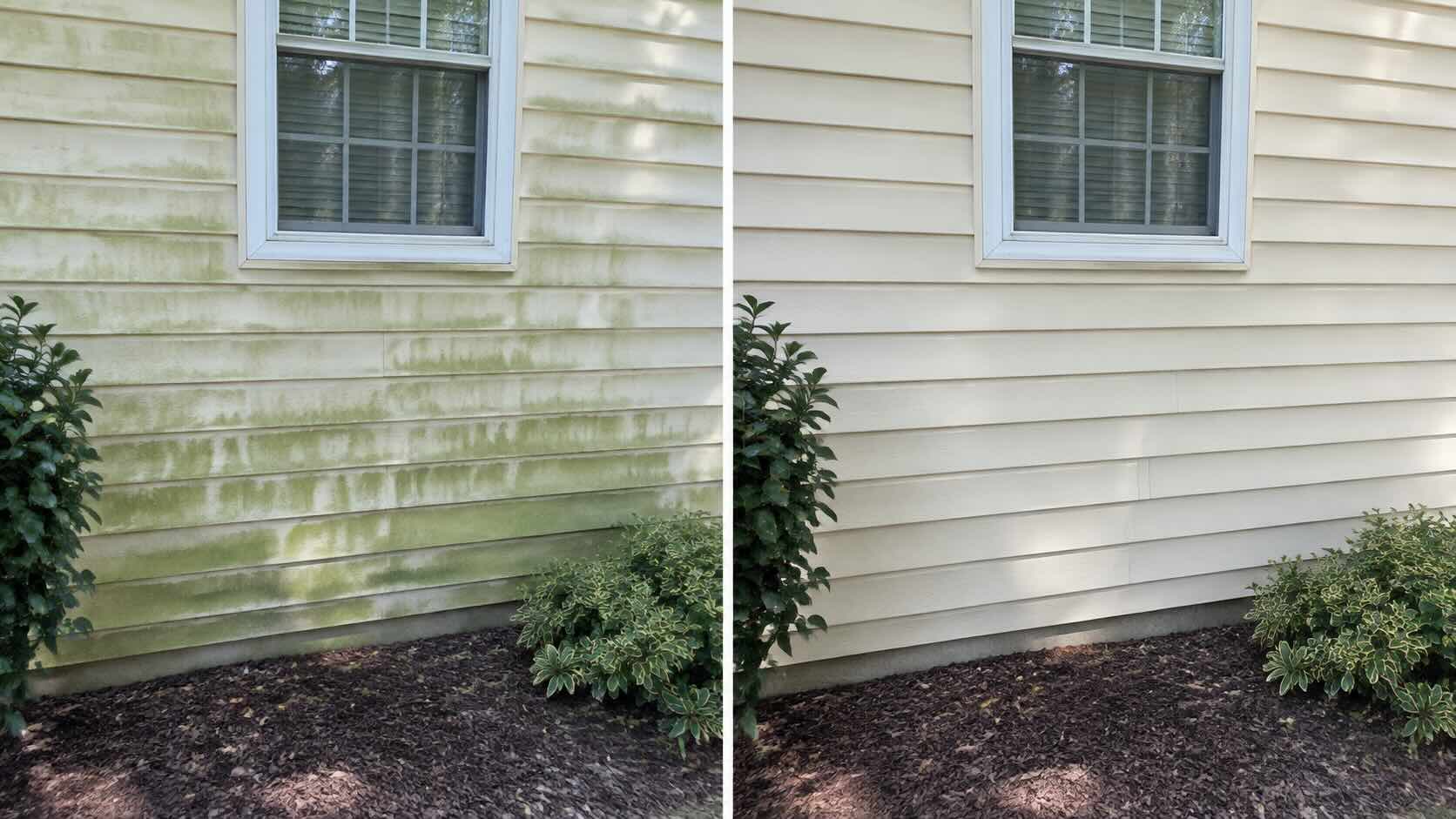
Algae on siding in Harford County, MD, often starts as a faint green patch on a shaded wall, then spreads until the whole side of a home or commercial building looks overdue for attention. You might notice it behind a shrub, beneath a window, or beside a downspout. The front of the property still looks clean, which makes that green wall around the corner seem even more puzzling.
We approach those stains by asking two questions: What is collecting on the siding, and why does that section stay damp? The answers guide the cleaning method and help explain why the buildup may return. Shade, humidity, tree cover, accumulated residue, and drainage all influence exterior growth across our local service area.
Maryland Pickers Power Washing helps homeowners and commercial property managers address the buildup without treating siding like a concrete driveway. Effective removal depends on judgment: choosing a suitable treatment, controlling water pressure, protecting nearby features, and recognizing when a maintenance problem needs attention beyond cleaning.
Why Siding Turns Green in the First Place
Green buildup usually develops where moisture lingers alongside accumulated exterior residue. Rain wets the wall, shade slows drying, and dirt or organic debris collects along siding seams and textured surfaces. That combination creates favorable conditions for algae and other organic growth.
When we assess algae on siding in Harford County, MD, we look beyond the color. The location and pattern often tell us more than the size of the stain.
A broad green film across a shaded elevation suggests a different exposure pattern from a narrow streak beneath an overflowing gutter. Heavy buildup near the foundation may point toward repeated splash-back. Discoloration behind dense landscaping raises questions about shade and airflow.
Green Color Is a Clue, Not a Complete Diagnosis
People often use “algae,” “mold,” and “mildew” interchangeably when describing exterior stains. We do not assume that every green or dark patch contains the same material. A wall can carry organic growth, pollen, ordinary dirt, road film, and other residue together.
Removing algae from siding in Harford County, MD, therefore starts with assessing the surface rather than choosing a cleaner based on color alone. We also consider whether the siding shows oxidation, weathering, damaged paint, or another condition that ordinary house washing will not correct.
That distinction prevents an important misunderstanding: a clean surface does not necessarily look new. Washing can remove buildup while leaving age-related fading, permanent discoloration, or a deteriorated finish visible.
Why One Side of Your Building Looks Worse
A property rarely weathers evenly. One wall receives direct sun and moving air, while another sits behind trees or beneath an overhang. Both experience the same rainstorm, but they may dry at very different rates.
This uneven drying helps explain why algae on siding in Harford County, MD, can cover one elevation while leaving the opposite wall comparatively clear. Our residential cleaning guidance identifies north-facing walls, shaded surfaces, and areas beneath trees as common trouble spots.
Shade Gives Moisture More Time
Mature trees, neighboring buildings, porch roofs, and dense landscaping can all limit sunlight. North-facing siding often dries more slowly after rain, particularly when another source of shade compounds the exposure.
We pay close attention to these areas when evaluating green algae on Harford County siding. The issue is not that a shaded property lacks maintenance. The wall simply experiences conditions that encourage recurring buildup.
An open, sunny wall may need less frequent attention than a sheltered wall a few feet away. Recognizing that difference helps us recommend a cleaning plan that follows the property’s actual needs rather than an arbitrary schedule.
Overhangs and Recessed Areas Need Attention Too
Protected areas can still collect exterior film. Porch ceilings, siding beneath window ledges, trim lines, and sections behind downspouts may hold residue that owners overlook during a quick walk around the building.
Our house-washing assessment includes these less obvious areas because cleaning only the most visible green patch can leave the surrounding exterior looking uneven. We review the accessible siding, trim, and adjoining features before defining the scope.
The Moisture Sources That Keep Feeding Buildup
Shade explains slow drying, but it does not explain every stain. Sometimes the wall receives more water than it should.
When algae on siding in Harford County, MD, returns repeatedly in the same narrow area, we look for a moisture pattern. Cleaning removes the accumulated growth; it does not fix the source of repeated wetting.
Gutters and Downspouts
Overflow patterns, concentrated discharge, and splash-back can leave recurring stains around a building. A dirty area near a downspout deserves a closer look, especially when the surrounding wall stays relatively clean.
We may identify a drainage concern during assessment or notice it more clearly after washing. Gutter service, drainage corrections, and related repairs remain separate maintenance tasks. Professional cleaning gives owners a clearer view of the condition but cannot substitute for those repairs.
Landscaping and Ground-Level Exposure
Landscaping can create several overlapping conditions: shade, limited airflow, retained leaf debris, and repeated moisture near the wall. Irrigation may also contribute to exterior wetting where it reaches siding or nearby surfaces.
A lasting maintenance plan for algae on siding in Harford County, MD, should consider those conditions alongside cleaning. If shrubs crowd a wall or water repeatedly splashes against it, removing the green film addresses the result—not the entire cause.
For commercial properties, we also review pavement slopes and adjacent drainage. Water movement matters both before cleaning, when it contributes to buildup, and during cleaning, when we must manage the wash water responsibly.
How Pollen, Leaves, and Dirt Add to the Problem
Not every part of a green-looking wall consists of algae. Harford County exteriors collect spring pollen, airborne dirt, leaf residue, cobwebs, and traffic-related film. Those materials can overlap with organic growth and make siding look dull or uneven.
Professional cleaning for algae on siding in Harford County, MD, needs to address that combined buildup. A wall may look greener in a shaded section and grayer near a roadway, yet both sections belong in the same carefully defined house-washing plan.
Seasonal Residue Changes the Appearance
Spring pollen can leave a noticeable film on siding and exterior trim. Rain combines that residue with other surface dirt. Later, fallen leaves and decaying debris can retain moisture around gutters, foundation edges, and outdoor surfaces.
These seasonal changes help explain why an exterior can look relatively clear during one inspection and noticeably stained later. They also make a single photograph an incomplete picture of the property’s exposure.
We consider the surrounding trees, accumulated debris, and recurring stain locations when planning algae removal from siding in Harford County, MD. The aim is to clean the actual buildup present, not apply the same treatment to every discolored surface.
What Green Buildup Means for Your Property
A green wall does not automatically mean the siding needs replacement. It does mean the exterior deserves assessment.
For many owners, algae on siding in Harford County, MD, first becomes a concern because of appearance. A pale-colored home develops obvious green panels. A commercial entrance looks neglected despite careful maintenance inside. An apartment building shows uneven staining across several elevations.
Cleaning addresses that visible buildup and can reveal maintenance issues that dirt previously obscured. Our residential service includes attention to loose siding, deteriorating caulk, damaged trim, and drainage patterns that may affect the work.
Separate Wall Staining From Walking-Surface Hazards
Algae on a vertical wall presents a different concern from organic growth on a walkway. Damp, shaded concrete can develop a slick surface, particularly around steps, entrances, and frequently used pedestrian routes.
We keep those categories separate when discussing the job. Siding may need a lower-pressure treatment, while adjoining concrete may require controlled pressure and a different cleaning sequence.
A complete assessment can identify both needs without assuming that every green surface should receive the same process. That matters for homes with shaded front steps and commercial buildings where customers or tenants pass close to the affected wall.
Why More Pressure Is Not the Answer
The visible stain makes a pressure washer seem like an obvious solution. The problem is that siding, windows, trim, and exterior openings do not tolerate careless force.
Professional treatment for algae on siding in Harford County, MD, should prioritize the material, not the machine’s maximum output. Excessive pressure can force water behind siding, strip paint, affect window seals, scar wood, or disturb vulnerable joints.
A Rental Machine Does Not Choose the Method
Operating equipment involves more than pointing a nozzle at a stain. Pressure, working distance, spray direction, cleaning solution, rinsing technique, and surface condition all influence the result.
For siding algae removal in Harford County, MD, the difficult part is often recognizing what not to do. An older painted section, a loose panel, or a leaking window changes the cleaning plan.
Our professional home-washing process accounts for those details before treatment begins. That assessment helps reduce avoidable damage and supports a more consistent result than treating each visible patch independently.
Spot Cleaning Can Leave an Uneven Exterior
Removing one green section may expose how much film remains elsewhere. The treated patch looks cleaner, while adjoining panels still carry pollen, dirt, or weathering.
We define the scope before starting so owners understand whether the work covers a localized area, selected elevations, or the accessible exterior as a whole. Clear boundaries also prevent confusion about trim, porches, gutter exteriors, and other nearby features.
How We Professionally Remove Algae From Siding
Our process begins with the building, not the spray equipment. We review the siding material, visible condition, stain pattern, landscaping, access, water availability, and drainage.
That preparation shapes our approach to algae on siding in Harford County, MD. A sound vinyl-sided home requires different handling from weathered painted wood or a commercial façade that combines siding, masonry, signage, and exterior lighting.
First, We Assess the Surface and Its Surroundings
We look for loose trim, damaged siding, deteriorated seals, vulnerable electrical features, and other details that may require caution. We also identify plants, furniture, vehicles, and access routes near the work area.
Owners can help by telling us about known leaks, previous repairs, delicate landscaping, or areas where water collects. Those details may not appear in photographs, but they can materially affect the work.
Then, We Select a Surface-Appropriate Treatment
For algae removal on siding in Harford County, MD, lower-pressure washing often provides the appropriate approach. Soft washing combines suitable cleaning solutions with controlled application and rinsing rather than relying on aggressive pressure.
The cleaning solution helps loosen and treat organic buildup; the rinse removes the residue. We choose the process according to the material and its condition, not simply because the stain looks heavy.
Finally, We Rinse and Review
After treatment, we rinse the appropriate areas and review the visible result. We distinguish remaining contamination from oxidation, fading, damaged finishes, or stains that routine cleaning cannot fully remove.
That final distinction matters. Responsible professional washing should leave owners with realistic information about the exterior—not a promise that cleaning will reverse every sign of age.
Residential Cleaning: Look Beyond the Front Wall
Homeowners often discover the worst buildup where they spend the least time: a side yard, behind a garage, or along a shaded rear elevation.
When we plan residential service for algae on siding in Harford County, MD, we consider the whole accessible exterior. Siding seams, window lines, porch features, foundation edges, and sections behind downspouts can all collect overlooked residue.
Prepare the Property Before the Visit
Close windows and doors, secure pets, and remove fragile outdoor belongings from the work area. Move vehicles when they block access or when adjoining driveway cleaning forms part of the scope.
Tell us about loose siding, leaking windows, damaged trim, or unusual drainage. We also need access to the agreed work areas and a functioning water source when required. Homeowners do not always need to remain on-site if we arrange access and instructions beforehand.
Our residential cleaning service can include house washing and other exterior surfaces, but each area needs its own method. Adding a patio or driveway does not mean we wash it the same way as the siding.
Commercial Cleaning: The Building Must Keep Working
A commercial property adds another layer of planning. Customers need entrances, employees need access, deliveries need space, and tenants may use the building throughout the day.
Removing algae on siding in Harford County, MD, from an occupied commercial property requires coordination as well as cleaning technique. We discuss operating hours, pedestrian routes, vehicles, equipment clearance, and sections that may need temporary access restrictions.
Plan the Work in Practical Zones
An office building may allow work before employees arrive. A retail property may need careful coordination around its busiest entrance. Apartment communities may require phased cleaning and resident notices.
We provide commercial exterior cleaning for offices, storefronts, warehouses, restaurants, apartment complexes, and other facilities. The scope can include building exteriors and adjoining areas, but we identify each surface and its requirements separately.
Manage Runoff Before Cleaning Starts
Professional removal of siding algae in Harford County, MD, also requires attention to where wash water travels. We assess nearby drains, surface slopes, and the material the water may carry.
Our commercial cleaning guidance explains that outdoor wash water should be controlled and kept out of streets, gutters, and storm drains. Depending on site conditions, the plan may require drain protection, containment, collection, and appropriate disposal arrangements. A cleaner’s “biodegradable” label does not make uncontrolled runoff acceptable.
Keeping Buildup From Taking Over Again
Cleaning resets the exterior, but it does not change the building’s orientation or remove every source of shade. Recurrence remains possible where damp conditions persist.
For recurring algae on siding in Harford County, MD, we recommend watching the areas that stained first. Their return pattern helps distinguish a general maintenance need from a localized moisture issue.
Use the Clean Exterior as a Baseline
After washing, note which elevations remain clear and where discoloration returns. A broad shaded wall may follow a different pattern from a concentrated streak beneath a gutter.
That information makes the next maintenance decision more useful. It can support a cleaning schedule, identify an area needing repair, or show that only part of a commercial property needs more frequent attention.
Choose Frequency Based on Exposure
Our residential guidance identifies annual cleaning as a useful starting point for many homes. Properties with heavy shade, persistent moisture, or recurring organic growth may need more frequent service.
There is no single schedule for every commercial building. We base maintenance discussions on exposure, surface condition, property use, and how quickly buildup returns. Managing algae on siding in Harford County, MD, should follow those observations rather than a blanket promise that one cleaning will last a fixed number of months.
Green Walls, Clear Answers: FAQs About Algae on Siding in Harford County, MD
What causes algae on siding in Harford County, MD, when the rest of the building looks clean?
Different walls receive different amounts of sun, airflow, and water. We commonly examine shaded elevations, north-facing siding, areas beneath trees, and sections near downspouts when one wall develops heavier buildup.
We also consider accumulated pollen, dirt, and leaf residue. A concentrated stain may suggest repeated wetting, while a broad film may reflect slow drying across the elevation. Appearance alone does not establish the exact cause, so we assess the material, condition, and surrounding exposure before selecting a treatment.
Do you use soft washing or high pressure to remove algae from siding?
We choose the method according to the siding material, its condition, and the buildup present. Lower-pressure washing with an appropriate cleaning solution often suits siding because the treatment does much of the work before controlled rinsing.
We do not use maximum pressure simply because a stain looks stubborn. Excessive force can drive water behind siding or damage finishes and nearby features. Concrete elsewhere on the property may require a different method. The term “power washing” describes the broader service; it does not mean every surface receives aggressive pressure.
Can cleaning algae on siding in Harford County, MD, damage plants or cause water intrusion?
The work requires precautions because landscaping, windows, doors, electrical features, and siding openings surround the cleaning area. We assess those details before washing and may pre-wet landscaping, protect sensitive features, and adjust the application and rinse.
Existing defects matter. Loose siding, failed seals, damaged trim, or leaking windows can affect whether and how we proceed. We ask owners to disclose known problems and close windows and doors beforehand. Cleaning does not repair an opening or make a deteriorated surface watertight, so preparation and condition assessment remain essential.
How long will siding stay clean after professional algae removal?
We cannot assign every property the same interval. Shade, moisture, tree cover, surface condition, and drainage influence how quickly buildup returns. We use annual residential cleaning as a starting point for many homes, with more frequent attention where exposure warrants it.
For commercial properties, we may discuss separate schedules for building elevations and high-use surrounding areas. Rapid recurrence in one location also deserves investigation rather than automatic repeated washing. Cleaning removes the buildup, but it cannot correct a leak, gutter overflow, or drainage problem that continues wetting the surface.
What affects the price, and what should a siding-cleaning estimate include?
We consider the size and scope of the work, siding material, condition, buildup, access, landscaping, water availability, and drainage. Commercial scheduling, pedestrian access, and wash-water controls may also affect the plan.
An estimate should identify the included elevations and features, preparation responsibilities, cleaning approach, and any limitations. Routine algae treatment should not imply restoration of faded siding, removal of oxidation, or repair of damaged finishes. We encourage owners to provide the property address, photographs, known defects, and access restrictions so the proposed work matches the building’s actual needs.
Start With the Wall—and the Reason It Stays Wet
Green siding deserves more than a quick blast of water. The right professional service removes the buildup while accounting for the material, surrounding property, and conditions that allowed the stain to develop.
We provide residential and commercial exterior cleaning throughout Harford County, including Bel Air, Fallston, Forest Hill, Abingdon, Churchville, Havre de Grace, Aberdeen, Edgewood, Belcamp, and Riverside. We confirm availability using the actual address and requested work rather than relying on a town name alone.

0 Comments