

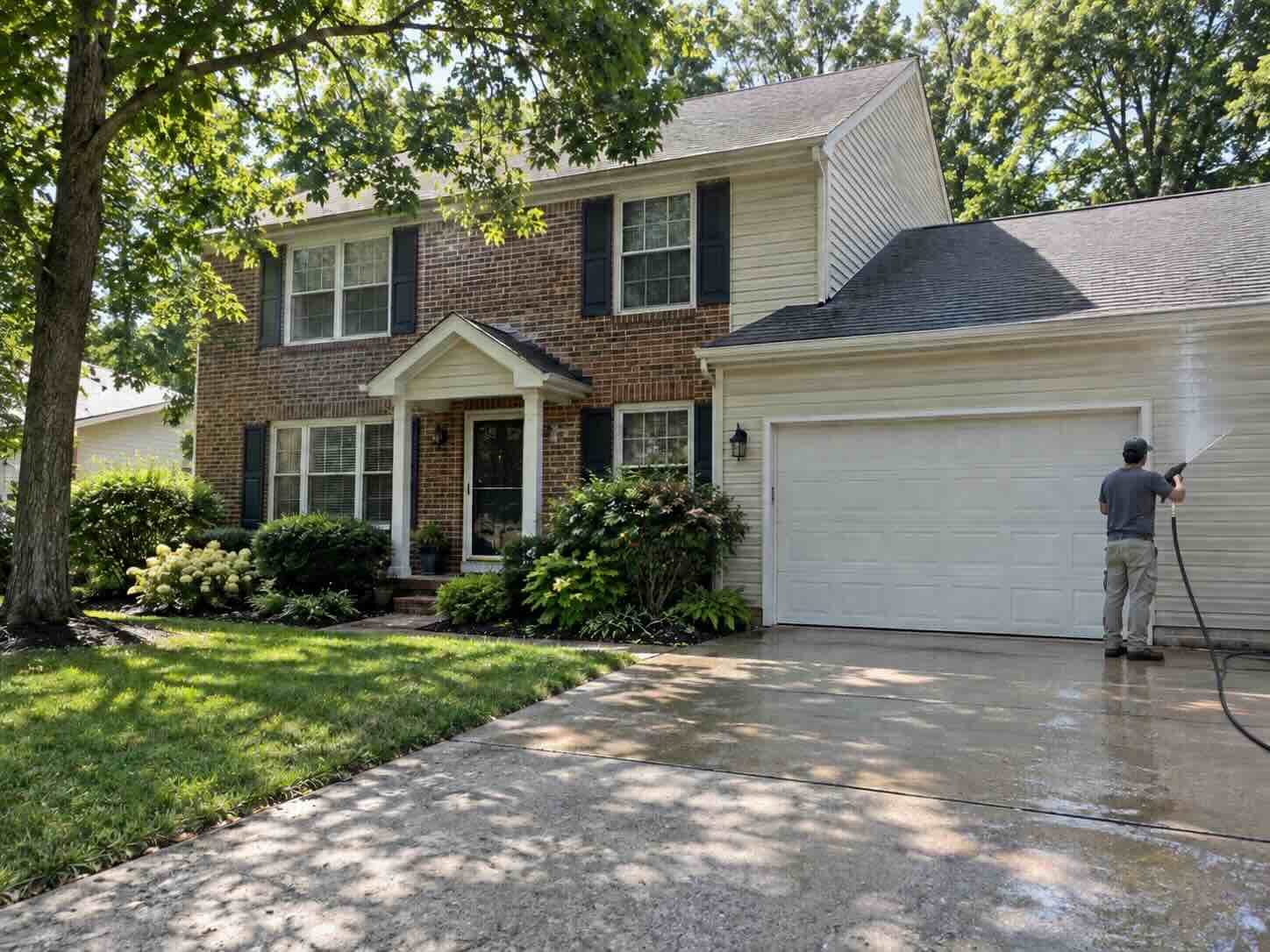
Your home’s exterior takes the full force of Harford County weather: spring pollen, humid summers, leaf debris, shaded moisture, road dust, and the algae and mildew that settle into siding, concrete, roofing, and outdoor living spaces. Professional home power washing removes that buildup with a surface-specific approach that restores appearance while protecting the materials that make up your property.
Maryland Pickers Power Washing provides residential exterior power washing throughout Harford County, including Bel Air, Fallston, Forest Hill, Abingdon, Churchville, Havre de Grace, Edgewood, and nearby communities. We clean homes, townhomes, residential developments, and shared community spaces with methods that account for the surface, the buildup, drainage, landscaping, access, and the condition of the property.
What Professional Home Power Washing Includes
“Power washing” is often used as a catchall term, but a complete residential cleaning service involves much more than spraying a surface with high-pressure water. Different exterior materials respond differently to water pressure, cleaning solutions, dwell time, rinsing, and agitation. A vinyl-sided house, a composite deck, a concrete driveway, and an asphalt-shingle roof should never be treated as if they are the same surface.
Professional home power washing means selecting the right method for the job rather than relying on one machine setting or one cleaning process.
For homeowners in Harford County, professional home power washing may include:
- House washing for vinyl, fiber-cement, painted wood, brick, stucco, and other exterior cladding.
- Roof cleaning for organic staining, algae, moss, lichen, and dark streaks.
- Driveway and concrete cleaning for dirt, tire marks, mildew, algae, leaf stains, and embedded grime.
- Patio, porch, walkway, and entryway cleaning.
- Deck and fence cleaning for wood, composite, vinyl, and other outdoor materials.
- Gutter exterior cleaning and brightening where streaking or surface grime affects appearance.
- Cleaning around retaining walls, pool decks, steps, curbs, outdoor seating areas, and other hardscape features.
- Exterior cleaning for townhome communities, condominium associations, and homeowner associations.
The goal is not simply to make surfaces look lighter for a day. Proper professional residential home power washing addresses the contaminants that collect over time, including mildew, algae, pollen, soot, insect residue, cobwebs, road film, soil splash, and airborne debris. These materials often settle into seams, textured concrete, siding laps, trim lines, foundation edges, and areas where rainwater dries slowly.
Why Harford County Homes Need Regular Exterior Cleaning
Harford County properties experience conditions that encourage exterior buildup. A home in a sunny open subdivision may deal mostly with pollen, dust, and traffic film. A wooded property near Forest Hill or Churchville may have more shade, leaf debris, moisture retention, and organic growth. Waterfront-adjacent homes near Havre de Grace can face different moisture exposure and airborne residue than a property farther inland.
The same house can also have very different cleaning needs from one side to the other. North-facing siding often dries more slowly after rain. Walls beneath mature trees collect pollen, sap, leaf residue, and shade-driven algae. Driveways near downspouts may develop dark splash-back staining. A patio that stays damp under a roofline or behind landscaping can become slick long before the rest of the yard shows visible buildup.
Regular professional home power washing helps homeowners stay ahead of those patterns.
Algae, Mildew, and Moisture Stains
Green, black, or dark gray staining on siding, concrete, decks, and fencing often points to organic growth or moisture-related buildup. It tends to thrive where shade, humidity, and limited airflow keep surfaces damp. While the appearance may start as a light discoloration, it can spread across siding panels, porch steps, walkways, and foundation areas.
The correct cleaning method removes the buildup without unnecessarily stressing the underlying material. For example, a low-pressure house wash can treat siding and trim differently than a pressure-based concrete-cleaning process. The surface determines the method—not the other way around.
Professional Home Power Washing for Pollen, Dust, and Seasonal Residue
Spring pollen is especially noticeable on light-colored siding, windowsills, porches, deck rails, outdoor furniture areas, and concrete. Pollen does not always look serious at first, but when it combines with rainwater, airborne dirt, and organic residue, it can leave a dull film across the exterior.
Late summer and fall bring their own challenges. Leaves, twigs, seed pods, acorns, and decaying debris can trap moisture near roofs, gutters, decks, retaining walls, and walkways. Cleaning after these seasonal changes helps homeowners reset the exterior before buildup becomes more established.
Concrete That Looks Dark or Uneven
Concrete is durable, but it is not immune to staining. Driveways, sidewalks, patios, front steps, and pool-adjacent hardscapes absorb dirt and collect moisture in their textured surfaces. Vehicles add tire residue, oil spots, brake dust, and road grime. Trees contribute tannins and leaf stains. Shaded sections can develop algae that makes the surface look dark and, in some cases, feel slippery.
Professional driveway and concrete cleaning reaches into those textured areas more effectively than a quick rinse from a consumer-grade machine. The process also produces a more even result when the surface is cleaned systematically rather than in random passes.
The Difference Between Pressure Washing and Soft Washing
Homeowners often ask whether they need pressure washing, power washing, or soft washing. These terms overlap in everyday conversation, but the important question is simpler: what cleaning method suits the surface in front of us?
Professional home power washing includes both controlled pressure cleaning and lower-pressure washing methods, depending on the material and type of buildup.
High-Pressure Cleaning
Pressure is useful on durable hard surfaces such as concrete driveways, sidewalks, patios, certain masonry areas, and some retaining walls. These surfaces can handle more mechanical cleaning when the operator uses the correct equipment, distance, flow rate, and technique.
Even durable concrete requires care. Excessive pressure, poor nozzle selection, uneven passes, or working too closely to the surface can leave visible lines, etching, or inconsistent results. A professional approach focuses on controlled, even cleaning rather than maximum force.
Soft Washing
Soft washing uses lower pressure combined with appropriate cleaning solutions and a measured rinse. This approach is often appropriate for exterior siding, painted surfaces, trim, roofs, delicate masonry, fences, and other materials that could be damaged by aggressive pressure.
For house washing, the cleaning solution does much of the work of loosening and treating organic growth. Water pressure then rinses the surface clean. This protects the exterior while removing the algae, mildew, pollen, and grime that have built up.
Why “More Pressure” Is Not Better
A common misconception is that a stronger machine always delivers a better result. In reality, too much pressure can force water behind siding, scar wood, damage window seals, strip paint, disturb mortar, mark composite materials, or affect shingles.
We evaluate the surface before selecting a method. The right process may involve low pressure, controlled pressure, a specific solution, pre-treatment, rinsing, or a combination of techniques. That judgment protects the home and produces a cleaner, more consistent finish.
Areas Around the Home Worth Cleaning
A complete exterior cleaning plan looks beyond the most visible side of the house. Many of the surfaces that affect curb appeal, safety, and everyday enjoyment sit at ground level or in overlooked corners of the property.
House Siding, Trim, and Exterior Features
House washing can remove the film that develops on siding, trim, soffits, fascia, shutters, porch ceilings, exterior columns, and around window lines. Clean siding changes the overall look of a property because it brightens the surfaces people see first from the street, driveway, and front entry.
We also pay attention to areas where buildup often hides:
- Under window ledges.
- Along siding seams.
- Behind downspouts.
- Near hose spigots and utility boxes.
- Around foundation edges.
- Under porch roofs and overhangs.
- Along trim where water tends to run or collect.
Cleaning these areas can reveal the home’s actual condition more clearly. Homeowners may notice loose caulk, peeling paint, damaged trim, deteriorating seals, or drainage patterns that were hidden behind surface grime.
Professional Home Power Washing for Roofs
Dark roof streaks can change the appearance of an otherwise well-maintained home. Roof cleaning requires a surface-appropriate process because roofing materials are not designed for aggressive pressure. The cleaning method should address organic staining while respecting the condition and material of the roof.
Roof cleaning is particularly relevant for homes with surrounding trees, consistent shade, north-facing roof planes, or moisture exposure near wooded areas. Removing visible buildup can improve the roof’s appearance and helps homeowners inspect the surface more clearly for missing shingles, flashing concerns, gutter overflow patterns, or accumulated debris.
Driveways, Walkways, and Front Steps
Your driveway and front walk are among the first surfaces guests, delivery drivers, neighbors, and prospective buyers encounter. Because they receive traffic, runoff, and exposure from vehicles, they often collect buildup faster than other areas of the property.
A professional driveway washing service may address:
- General gray or black surface grime.
- Mildew and algae.
- Tire marks.
- Organic staining.
- Leaf and acorn residue.
- Soil splash from landscaping.
- Dirt accumulated along expansion joints and edges.
- Discoloration near garage doors, downspouts, or parked vehicles.
Front steps and sidewalks deserve the same attention. In shaded or damp areas, cleaning can help restore traction and reduce the slick film that often develops on concrete.
Patios, Decks, and Outdoor Living Areas
A patio, deck, or backyard entertaining space should feel ready to use—not like another maintenance project waiting for the right weekend. Outdoor surfaces collect pollen, cobwebs, dirt, grill residue, leaf stains, and moisture-related buildup. Furniture, planters, railings, steps, and the space beneath trees can make cleaning more complex than it appears.
Wood decks require particular care. Too much pressure can raise the grain, create grooves, or damage softer wood fibers. Composite decking, vinyl railings, and painted surfaces also need a method that cleans without leaving marks or affecting the finish.
We tailor the approach to the material, its age, its condition, and the buildup present. That is especially important before staining, sealing, painting, hosting an event, or reopening an outdoor space for the season.
Fences, Retaining Walls, and Masonry
Fences and retaining walls are easy to overlook because they sit away from the front of the home, yet they can accumulate some of the heaviest staining on the property. Shade, landscape irrigation, leaf debris, and ground-level moisture often contribute to visible algae or mildew.
Masonry surfaces can also show efflorescence, mineral deposits, organic growth, dirt, or staining caused by poor drainage. A careful assessment helps distinguish ordinary surface buildup from a condition that may require a different maintenance response.
How Often Should You Schedule Your Professional Home Power Washing?
Most Harford County homes benefit from professional exterior cleaning about once per year. That timing works well for many properties because it prevents ordinary buildup from becoming heavily embedded and keeps major surfaces looking maintained.
Some properties need more frequent attention. A six-month cleaning schedule may make sense when a home has substantial tree cover, persistent shade, a damp yard, nearby water exposure, heavy pollen accumulation, or surfaces that see frequent traffic and use.
Consider scheduling professional home power washing more often if you notice:
- Green or black staining returning quickly after rain.
- A driveway or sidewalk becoming slippery in shaded sections.
- Heavy pollen film each spring.
- Dark roof streaks or visible organic buildup.
- Siding that appears dull, streaked, or uneven in color.
- A patio or deck that stays dirty despite regular sweeping.
- A planned sale, appraisal, listing photography session, gathering, or exterior renovation.
- A neighborhood association maintenance requirement or shared-property cleaning plan.
The best schedule depends on the home’s actual exposure rather than a fixed calendar rule. A bright, open property in Bel Air may not need the same frequency as a heavily wooded residence in northern Harford County or a waterfront-adjacent home near Havre de Grace.
What to Expect From a Professional Cleaning Visit
Good exterior cleaning begins before water touches the property. We review the job with attention to the surfaces, visible staining, access, water availability, landscaping, drainage, exterior electrical features, and any areas that need extra care.
Property Assessment
Before cleaning, we assess the material and condition of the surfaces involved. We also identify sensitive areas such as exterior outlets, door thresholds, damaged siding, loose trim, open vents, older paint, fragile landscaping, and areas where water runoff needs special attention.
This initial review helps us choose the appropriate cleaning method and identify maintenance concerns that may affect the work.
Surface-Specific Preparation
Preparation may include moving or protecting items near the work area, pre-wetting landscaping, covering sensitive features where appropriate, managing hoses, and ensuring access to the areas being cleaned. Homeowners can help by closing windows, clearing vehicles from driveways, removing outdoor décor, securing pets, and putting away fragile furniture or personal items.
For homeowner associations and managed communities, preparation may also involve coordinating access, resident notices, parking arrangements, amenity-area closures, and work zones.
Treatment and Cleaning
The cleaning process varies by surface. Siding may receive a low-pressure wash designed to treat organic growth and rinse away residue. Concrete may be pre-treated and cleaned with controlled pressure for a more even finish. A roof requires a different procedure entirely.
We do not treat every material with the same pressure setting or solution. That distinction is central to safe, effective residential power washing.
Rinsing and Final Review
After cleaning, we rinse treated areas carefully and review the result. The final inspection helps confirm that the visible buildup has been addressed and that surrounding areas remain orderly. Some deep stains, permanent discoloration, oxidation, rust, paint failure, or damage may not disappear through routine cleaning alone. We set realistic expectations about what cleaning can remove and what may require repair, refinishing, sealing, or specialized treatment.
Preparing Your Home Before Power Washing
A few simple steps make the service smoother and help protect belongings around the exterior.
Homeowner Preparation Checklist
- Close all windows and doors securely.
- Make sure exterior electrical covers are intact and outlets are protected.
- Move vehicles from the driveway if driveway cleaning is scheduled.
- Clear patio furniture, rugs, toys, planters, grills, and decorative items from the work area when possible.
- Remove fragile items from porches, decks, and outdoor tables.
- Keep pets indoors or in a secure area away from hoses and active cleaning zones.
- Let us know about damaged siding, loose shutters, leaking windows, delicate landscaping, drainage concerns, or areas that need special attention.
- Ensure access to gates, outdoor spaces, and a functioning water source if required.
- Discuss any community access restrictions, parking rules, or HOA requirements before the scheduled service.
You do not always need to be home during the cleaning, provided we have access to the areas being cleaned and the necessary water source. Clear communication beforehand matters most.
Professional Home Power Washing for HOAs and Townhome Communities
Homeowner associations, condominium communities, and townhome developments have different needs than an individual residence. The work may involve repeated building elevations, shared sidewalks, mail kiosk areas, pool-adjacent hardscapes, entry monuments, sidewalks, retaining walls, fencing, parking curbs, patios, and common spaces.
A successful community cleaning project depends on planning as much as cleaning technique.
What Associations Should Consider
Property managers and HOA boards should identify the surfaces that need regular care, the areas that create the strongest visual impression, and the places where organic growth presents a safety concern. Common priorities include building exteriors, sidewalks, front entrances, shared patios, dumpster-pad-adjacent concrete, clubhouses, fencing, and retaining walls.
A recurring cleaning plan can help communities avoid the uneven appearance that develops when one building or common area becomes heavily stained before the rest of the property receives attention.
Scheduling Around Residents
Residential communities require practical coordination. We can work around resident access, visitor traffic, parking patterns, school schedules, amenity use, and local events. Early communication allows residents to move vehicles, clear personal items, close windows, and understand when particular areas may be temporarily unavailable.
The result is a cleaner community without unnecessary disruption to the people who live there.
Choosing a Professional Home Power Washing Company
Price matters, but the lowest quote does not always represent the best value for a home or community. Exterior cleaning requires a careful balance of equipment, water pressure, cleaning solutions, technique, and attention to the condition of each surface. When a company treats every material the same way, homeowners risk damaged siding, stripped paint, etched concrete, scarred wood, disturbed landscaping, water intrusion, or an uneven result that makes the exterior look worse rather than better.
Maryland Pickers Power Washing approaches residential exterior cleaning with the understanding that a Harford County home is not a collection of interchangeable surfaces. A vinyl-sided house in Bel Air, a wooded property near Forest Hill, a townhome community in Abingdon, and a waterfront-adjacent home near Havre de Grace may all require a different plan. We assess the buildup, material, condition, access, shade, drainage, landscaping, and work area before deciding how to clean it.
That process allows us to use controlled pressure where durable surfaces such as concrete need it and lower-pressure methods where siding, roofs, painted trim, fences, decks, or delicate materials require a more careful approach. We also plan for the details that affect a successful service visit: nearby plants, exterior outlets, windows, gates, downspouts, vehicles, resident access, shared community spaces, and runoff.
Why Homeowners and Communities Choose Maryland Pickers Power Washing
Homeowners and property managers choose Maryland Pickers Power Washing because we focus on the conditions that matter before the cleaning begins, not just the visible staining after it has become a problem.
We provide a surface-specific approach for house washing, roof cleaning, concrete cleaning, patios, decks, fences, walkways, and other exterior areas. Rather than using maximum pressure by default, we choose the method that fits the material and the buildup. That helps protect the property while delivering a cleaner and more consistent result.
For HOA and townhome communities, we also understand that the work must be coordinated around residents. We can account for parking, access, resident notices, shared entrances, sidewalks, common areas, amenity spaces, and the timing of the project. A clean community should not come at the expense of unnecessary disruption.
Questions Worth Asking Before Scheduling
A professional exterior cleaning company should answer practical questions clearly. Before scheduling professional home power washing, ask:
- What cleaning method will you use for my siding, roof, deck, driveway, patio, or other surface?
- Do you adjust water pressure, cleaning solutions, and rinsing techniques based on the material?
- How will you protect landscaping, exterior outlets, windows, trim, doors, and nearby features?
- Will you inspect the property before starting and identify areas that need special attention?
- What should I move, cover, close, or prepare before the service visit?
- How do you handle existing issues such as loose siding, damaged trim, aging paint, cracked concrete, or leaking windows?
- Can you safely treat shaded areas where algae, mildew, and moisture buildup return frequently?
- How will you manage water runoff, access, gates, vehicles, parking, and resident movement in a townhome or HOA community?
- Are you familiar with the weather patterns, tree cover, seasonal pollen, and moisture conditions common throughout Harford County?
Maryland Pickers Power Washing welcomes these questions because they reflect the details that protect the property and shape the finished result. We explain our recommended method, discuss any visible concerns, and provide preparation guidance so homeowners, HOAs, and property managers understand what to expect before the project begins.
A Practical Maintenance Plan for Harford County Homes
Professional home power washing works best alongside ordinary property maintenance. Power washing does not replace repairs, gutter service, drainage corrections, painting, sealing, or roof work. Instead, it gives you a cleaner starting point and makes emerging maintenance issues easier to see.
Spring
Spring is a popular time for house washing, driveway cleaning, and patio service. It removes winter residue and helps clear the pollen, dirt, and moisture stains that become apparent as the weather warms. Spring cleaning also prepares outdoor areas for regular use.
Summer
Summer is useful for maintaining decks, patios, walkways, and siding, especially in areas affected by shade and humidity. If algae or mildew returns quickly, summer cleaning can keep outdoor spaces more comfortable and safer underfoot.
Fall
Fall cleaning can address leaf stains, organic residue, and debris that collect around patios, walkways, retaining walls, roofs, and gutters. It is also a good time to prepare the exterior before winter moisture and freeze-thaw cycles arrive.
Before Major Property Events
Professional exterior cleaning can make a meaningful difference before listing a home, hosting a graduation party, welcoming holiday guests, preparing for appraisal photography, completing exterior repairs, or opening a patio or pool area for the season.
Clean surfaces do not just look better in photographs. They also help homeowners, buyers, residents, and contractors see the property more accurately.
Professional Home Power Washing Throughout Harford County
Maryland Pickers Power Washing works across Harford County’s central, eastern, northern, and southern communities. Our regular service areas include Bel Air, Fallston, Forest Hill, Abingdon, Churchville, Havre de Grace, Perry Hall, Edgewood, Aberdeen, Belcamp, and Riverside, with nearby addresses evaluated individually based on the property location and requested work.
Local conditions vary substantially from one area to another. Tree cover, slope, drainage, nearby water, traffic exposure, landscaping, and the age of the home all affect the way exterior buildup develops. We consider those conditions before determining the cleaning approach for a house, driveway, patio, roof, deck, fence, or shared community surface.
A property’s exact address is more useful than a ZIP code or general town name when confirming service availability. This is especially true for rural properties, addresses near municipal boundaries, and neighborhoods with mailing addresses that do not match the nearest community.
Frequently Asked Questions
How often should I schedule professional home power washing in Harford County, MD?
Most Harford County homes benefit from annual exterior cleaning. Homes with heavy shade, mature trees, damp areas, nearby water, persistent pollen, or recurring algae may need service every six months.
We recommend the schedule based on the home’s exposure, materials, and visible buildup rather than a fixed timeline.
Is professional home power washing safe for siding, roofs, and landscaping?
Yes, when the cleaning method matches the surface. We use controlled, lower-pressure methods for siding, trim, roofs, and other delicate materials, while durable concrete may require a different approach.
We also account for plants, garden beds, exterior fixtures, drainage, windows, and electrical features before work begins.
What is the difference between professional home power washing and renting a pressure washer?
A rental provides equipment; professional home power washing provides the experience to choose the appropriate method for each surface. That includes selecting pressure levels, cleaning solutions, rinsing techniques, and safe working distances.
Incorrect use can damage siding, wood, paint, concrete, window seals, landscaping, and roofing materials. We tailor the process to the home to reduce those risks and provide a more even result.
Can power washing remove black streaks, green algae, mildew, and stains from my driveway or house?
Professional home power washing can remove many common types of surface buildup, including algae, mildew, pollen, dirt, cobwebs, and road grime. Siding, concrete, patios, walkways, fences, and other exterior surfaces often respond well to the correct treatment.
Some conditions may not be fully removable through standard cleaning, including deeply embedded oil, rust, oxidation, paint failure, mineral deposits, or aging-related discoloration. We explain what can reasonably be expected before beginning work.
Do homeowners need to be present during residential power washing service?
Homeowners do not always need to be present if access, water availability, and instructions are arranged in advance. Before service, close windows and doors, secure pets, move vehicles when needed, remove fragile outdoor items, and ensure gates or work areas are accessible.
For HOA and townhome projects, the plan should also address resident notices, parking, common-area access, and any restrictions that may affect the work.

0 Comments