

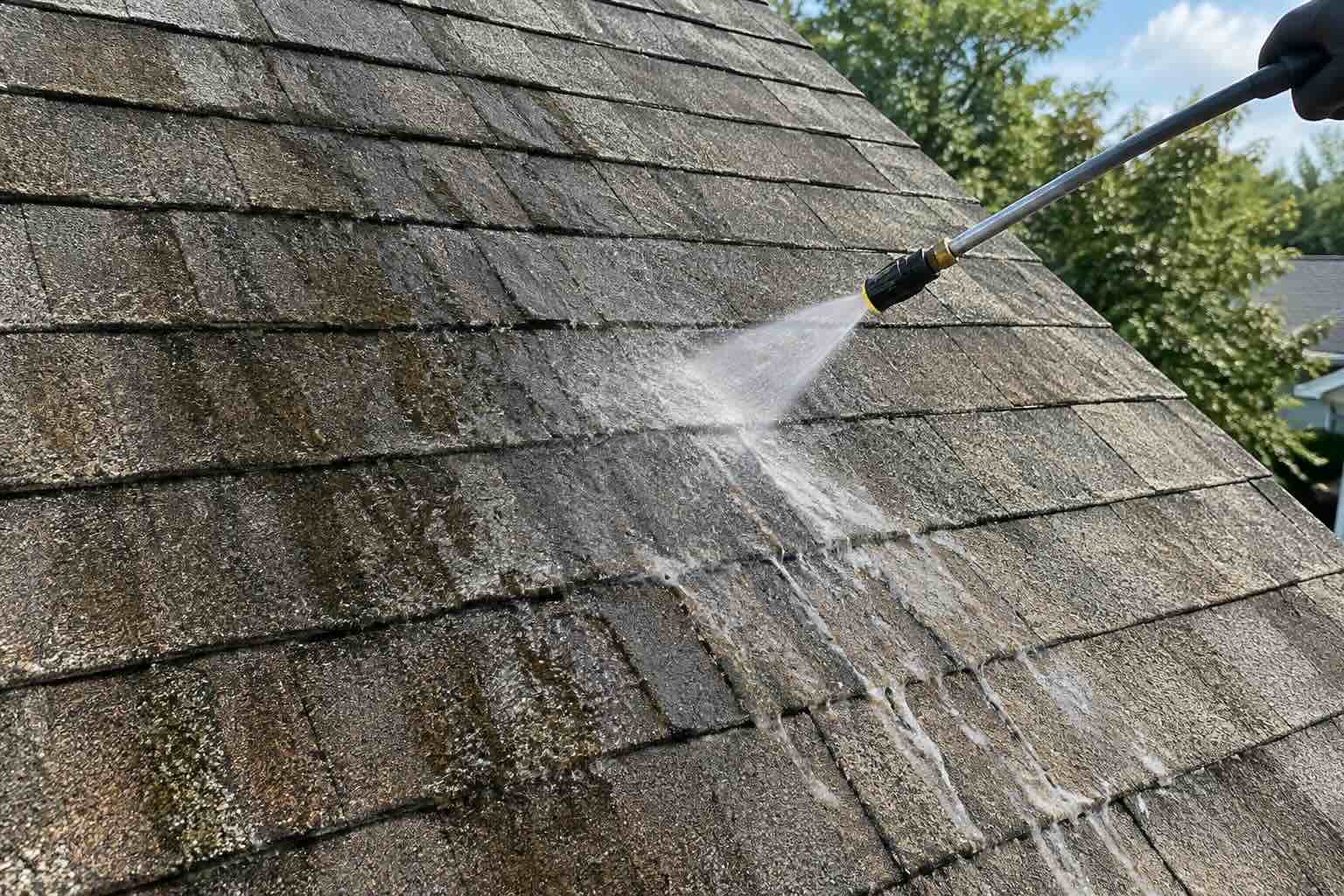
Roof cleaning in Harford and Baltimore County, MD protects one of the most important parts of your property while removing the dark streaks, algae, moss, lichen, pollen, and debris that can make an otherwise well-kept home or commercial building look neglected. Maryland Pickers Power Washing uses a surface-specific approach designed to clean roofing materials carefully, not blast them with unnecessary pressure.
A stained roof is easy to dismiss as a cosmetic issue, especially when the discoloration develops slowly. One season of pollen, humidity, tree debris, and rain may leave only a faint shadow along a roofline. Over time, though, shaded areas can develop dark streaks, green growth, patches of moss, or visible debris that holds moisture against the roof. In Harford and Baltimore County, where mature trees, humid summers, seasonal leaf fall, and varying levels of shade affect properties differently, roof maintenance deserves more thought than a quick rinse from a rented pressure washer.
We clean roofs as part of a broader exterior-care plan for homeowners, property managers, HOAs, retail properties, office buildings, warehouses, apartment communities, and other commercial sites. The correct method depends on the roof material, its age and condition, the type of staining present, nearby landscaping, drainage patterns, access, and the way the property is used.
Why Roof Stains Develop in Maryland
Roof discoloration rarely comes from one source. Most visible staining results from a combination of moisture, airborne debris, organic growth, and environmental exposure. A roof that looks clean on one side may have noticeable streaking on another because each slope receives different amounts of sun, shade, wind, rainwater, and tree cover.
Harford and Baltimore County properties face conditions that make roof buildup common:
- Humid summer weather that allows moisture to linger on shaded roof surfaces.
- Spring pollen that settles in roof valleys, gutters, and along shingle edges.
- Leaf debris, seed pods, twigs, and acorns from nearby trees.
- North-facing roof planes that receive less direct sunlight and dry more slowly.
- Moss, algae, mildew, and lichen growth in damp or shaded areas.
- Airborne dust, road film, soot, and general environmental residue.
- Overflowing gutters or poor drainage patterns that repeatedly wet portions of the roof.
- Tree branches that limit airflow and drop organic material onto the roof.
A wooded home in Forest Hill, Fallston, Churchville, or northern Harford County may experience different roof conditions than a more open property in Bel Air, Abingdon, Perry Hall, or Edgewood. Waterfront-adjacent properties near Havre de Grace can also face elevated moisture exposure and airborne residue. The same principle applies to Baltimore County properties with mature landscaping, dense neighborhoods, older tree cover, or shaded building elevations.
The visible stain is only part of the story. Roof cleaning gives property owners a clearer view of the roof’s condition by removing the buildup that can conceal loose shingles, damaged flashing, clogged valleys, gutter overflow marks, deteriorated sealant, or recurring moisture issues.
What Causes Black Roof Streaks?
Dark streaks on asphalt shingles often develop when organic growth and airborne contaminants settle on the roof and spread gradually across the surface. These marks can appear black, dark gray, brown, or green depending on the type of buildup, roof material, amount of moisture, and age of the staining.
Not every dark mark means the roof is failing. In many cases, it is surface buildup that responds well to a properly planned roof-cleaning process. Still, cleaning and repair are not the same service. Roof cleaning can remove stains and make inspection easier, but it cannot repair missing shingles, failed flashing, active leaks, granule loss, structural damage, or worn roofing materials.
We evaluate the roof before selecting a cleaning method. That process matters because black streaks may occur alongside other conditions that deserve attention, such as:
- Moss growing along shingle edges or beneath overhanging limbs.
- Lichen attaching to a roof surface.
- Heavy leaf accumulation in valleys.
- Gutters that overflow onto lower roof sections.
- Staining below chimneys, vents, skylights, or roof transitions.
- Repeated moisture exposure near shaded areas.
- Tree branches that scrape or rest on roofing materials.
- Older sections of roofing that need repair or replacement rather than cleaning.
A clean roof should not be treated as proof that a roof is problem-free. It is a better starting point for spotting maintenance concerns early.
Why Professional Roof Cleaning Matters
Roof cleaning is not the same as driveway cleaning, sidewalk washing, or general exterior rinsing. Roofing materials require careful handling, especially asphalt shingles, older roofs, painted metal roofing, tile, slate, and other surfaces that can be damaged by excessive water pressure or poor technique.
The wrong approach can create real problems. Aggressive pressure can disturb shingle granules, force water under roofing materials, damage flashing, mark painted surfaces, affect seals around roof penetrations, or leave uneven cleaning patterns that look worse than the original staining.
Professional roof cleaning in Harford and Baltimore County, MD means choosing the method that suits the roof rather than treating every stain with maximum force.
Roofs Are Not Built for High Pressure
A pressure washer can be useful on durable surfaces such as certain concrete driveways, sidewalks, patios, retaining walls, and masonry areas. Even then, it requires controlled technique. Roofs are different.
Asphalt shingles have a protective granular surface. High-pressure washing may dislodge or disturb those granules, reducing the roof’s ability to handle weather exposure over time. Water can also be driven beneath shingles or into vulnerable areas around flashing, vents, skylights, chimneys, ridge lines, and roof transitions.
A roof’s appearance may improve briefly after an aggressive wash, but visible damage or shortened material life is not an acceptable tradeoff. We avoid the “more pressure is better” mindset because it does not belong in responsible roof care.
The Surface Determines the Method
Professional exterior power washing should always begin with the material. A roof needs a different approach from vinyl siding, concrete, brick, wood fencing, composite decking, painted trim, or a storefront sidewalk.
We consider:
- The roofing material and its visible condition.
- The type and severity of organic buildup.
- Roof pitch, access, and safe working conditions.
- Nearby landscaping and water-management needs.
- Downspout locations and runoff paths.
- Gutters, roof valleys, and areas where debris collects.
- Roof penetrations such as vents, skylights, chimneys, and solar equipment.
- Existing damage, aging materials, loose components, or suspected repairs.
- The surrounding property, including walkways, patios, gardens, driveways, parking areas, and neighboring structures.
That assessment helps us determine whether cleaning is appropriate, what preparation is needed, and what expectations are realistic for the roof’s condition.
Soft Washing and Roof Cleaning
For many residential and commercial roofs, a low-pressure cleaning approach is safer than direct high-pressure washing. Often called soft washing, this process combines carefully selected cleaning solutions, controlled application, appropriate dwell time, and a measured rinse when suitable for the roof and manufacturer guidance.
The cleaning solution does the work of treating organic growth and loosening the residue attached to the roof surface. Water pressure is then used carefully to rinse or manage the process without the force that can damage delicate roofing materials.
What Soft Washing Can Address
A properly selected low-pressure roof-cleaning process may help address:
- Black or dark streaks on asphalt shingles.
- Green algae and moisture-related staining.
- Moss and lichen, depending on roof material and condition.
- Pollen, fine debris, and general surface grime.
- Organic buildup in roof valleys and shaded sections.
- Staining near gutters, downspouts, dormers, and lower rooflines.
- Visible residue under tree cover or in areas with restricted airflow.
Roof conditions vary widely, so a professional evaluation is important. Some stains respond quickly, while heavier growth may require a more measured process. Moss and lichen can be particularly persistent because they may attach firmly to the roof surface. Removing them too aggressively can create more harm than good.
What Cleaning Cannot Fix
A professional cleaning visit cannot correct every roof issue. It is important to separate removable surface buildup from physical defects that require a roofer or another qualified contractor.
Roof cleaning does not repair:
- Missing, cracked, curled, or broken shingles.
- Failing flashing around chimneys, vents, skylights, or walls.
- Active roof leaks.
- Structural sagging or deck damage.
- Granule loss caused by age or weathering.
- Improper roof installation.
- Damaged roof penetrations or vent boots.
- Rotten fascia, soffit, or roof decking.
- Storm damage.
- Severe oxidation or coating failure on metal roofing.
If we see visible conditions that suggest repair is needed, we can point them out so you can make an informed decision before relying on cleaning alone.
Residential Roof Cleaning in Harford and Baltimore County
Homeowners often schedule roof cleaning after noticing dark streaks from the street, but the value goes beyond curb appeal. A clean roof changes the look of the entire property because it sits above every other exterior feature. Freshly washed siding and a clean driveway can still look incomplete if the roof remains heavily stained.
Maryland Pickers Power Washing provides residential exterior cleaning that includes roof cleaning along with house washing, driveway cleaning, patio cleaning, walkways, decks, fences, gutters, and other exterior surfaces. We tailor the work to the materials and conditions present rather than applying the same process everywhere.
Homes With Tree Cover Need Extra Attention
Many Harford and Baltimore County homes sit near mature trees. Trees add shade and character to a property, but they also create roof-cleaning challenges. Branches can drop leaves, small limbs, seed pods, pollen, sap, and acorns into gutters and roof valleys. Shade slows drying after rain, allowing organic growth to establish itself more easily.
A tree-covered property may need roof cleaning more often than a home in an open, sunny neighborhood. The roof may also need seasonal debris management and periodic gutter maintenance to prevent water from backing up or spilling over the edges.
Look closely at roofs with:
- Overhanging branches.
- Heavy shade on north-facing slopes.
- Valleys that trap leaves and small debris.
- Gutters that fill quickly after storms.
- Moss growth near roof edges.
- Staining beneath tree limbs.
- Limited airflow between the roof and surrounding vegetation.
Tree trimming may also be worth discussing with a qualified arborist or landscaping professional when branches repeatedly deposit debris or rub against the roof.
Roof Cleaning Before Selling a Home
A stained roof can affect a buyer’s first impression. Even when the roof is structurally sound, dark streaks and moss can make prospective buyers wonder whether it has been neglected. Professional cleaning can help a listing present more accurately in curbside views, photographs, drone images, and in-person showings.
Before listing a home, consider a practical exterior plan that may include:
- Roof cleaning.
- House washing.
- Driveway and walkway cleaning.
- Patio, porch, or deck cleaning.
- Gutter exterior cleaning where visible streaks affect appearance.
- Cleaning of fences, retaining walls, and front-entry surfaces.
Exterior cleaning does not replace roof repairs or a pre-listing inspection. It can, however, remove the dirt and staining that prevent buyers from seeing the home clearly.
When a Homeowner Should Not Wait
Roof cleaning is best handled before buildup becomes extensive. Consider scheduling a professional assessment when you notice:
- Dark streaks spreading across shingles.
- Green patches or visible moss near roof edges.
- Lichen on shaded roof sections.
- Leaves and debris accumulating in valleys.
- Roof staining below overhanging trees.
- Recurring gutter overflow marks.
- Uneven roof coloration that was not present previously.
- A property that looks clean at ground level but weathered from the street.
- A planned sale, appraisal, exterior renovation, or major event.
Early attention provides more options than waiting until moss becomes thick or staining covers multiple roof planes.
Commercial Roof Cleaning for Maryland Properties
Commercial properties have different demands from a typical residence. A roof may cover a retail storefront, office building, warehouse, restaurant, apartment complex, condominium community, managed facility, or multi-unit property. Visibility, roof access, drainage, tenant activity, customer traffic, exterior signage, and business operations all affect how roof cleaning should be planned.
We provide commercial exterior cleaning for office buildings, retail storefronts, warehouses, restaurants, apartment complexes, industrial facilities, high-traffic entryways, sidewalks, loading areas, parking-related surfaces, and other commercial exterior areas.
Commercial roof cleaning requires coordination before work begins. A property manager may need to consider building access, tenant notices, rooftop equipment, parking, service schedules, drainage routes, landscaping, neighboring spaces, and storm-drain protection.
Multi-Unit and Managed Properties
HOAs, condominium associations, apartment communities, townhome developments, and property-management companies often need a consistent approach across multiple buildings. One roofline may show staining sooner than another because of trees, orientation, or drainage. If cleaning is postponed until every building looks heavily stained, the community can develop an uneven appearance that becomes more noticeable over time.
A planned maintenance schedule can help property managers prioritize:
- Building elevations with visible roof staining.
- Roofs beneath mature trees.
- Shared walkways and entrances affected by organic growth.
- Clubhouses, pool-adjacent structures, mail areas, and amenity buildings.
- Retaining walls, patios, fencing, and common-area concrete.
- Gutter and drainage areas where overflow contributes to staining.
- Buildings with recurring moisture exposure.
The goal is to make maintenance more predictable, not simply react to the most visible problem after it has become severe.
Commercial Cleaning Requires Runoff Planning
Water and debris management matter on commercial sites. Before exterior cleaning begins, we consider nearby storm drains, property slope, landscaping, vehicle access, walkways, loading areas, and the material being removed. This is particularly important around grease, sediment, leaves, dirt, and heavy traffic residue. Maryland Pickers Power Washing plans site-specific work to keep the area orderly and minimize the chance of wash water or debris reaching streets, gutters, and storm drains.
For roof cleaning, this preparation may include protecting nearby features, managing runoff routes, coordinating access, and scheduling work to limit disruption to tenants, employees, customers, residents, and deliveries.
How Often Should a Roof Be Cleaned?
There is no single schedule that fits every roof. Many properties benefit from an annual visual inspection and a professional cleaning assessment when visible buildup begins to develop. A roof surrounded by trees or exposed to regular shade and moisture may need attention more frequently than an open, sun-exposed roof.
For many homes and commercial properties, roof cleaning may be appropriate every one to three years. That range is not a rule; it is a starting point. The better approach is to base timing on the roof’s actual exposure and condition.
Factors That Affect Cleaning Frequency
A roof may need more frequent professional attention when it has:
- Dense tree cover.
- Persistent shade.
- A north-facing slope with slow drying.
- Nearby water or consistently humid conditions.
- Heavy pollen exposure.
- Gutters that collect debris often.
- Visible moss, algae, or lichen returning quickly.
- Roof valleys that trap leaves and organic debris.
- Limited airflow due to surrounding vegetation or closely spaced structures.
- A history of roof staining in the same areas.
A roof that stays dry, receives full sun, and has limited nearby vegetation may need less frequent cleaning. The key is avoiding a calendar-only approach. We evaluate what the roof is actually showing rather than recommending the same timeline for every property.
What to Expect During Professional Roof Cleaning
A careful roof-cleaning project starts with planning, not equipment. We review the property and identify the conditions that may affect safety, surface protection, cleaning results, and access.
Initial Assessment
Before work begins, we look at the roof from accessible locations and consider the visible buildup, roof material, drainage, access, landscaping, gutters, downspouts, and surrounding surfaces. We also note conditions that may require a roofer’s attention rather than cleaning.
This assessment helps us identify:
- Whether the roof appears suitable for cleaning.
- The type of staining or organic growth present.
- Areas with heavy debris accumulation.
- Roof sections affected by shade or runoff.
- Sensitive exterior features near the work area.
- Landscaping that needs protection.
- Downspout outlets and water flow paths.
- Access limitations or safety considerations.
- Existing damage that should be documented or addressed separately.
Property Preparation
Preparation may include protecting landscaping, moving or covering items near the work area where appropriate, managing hoses, identifying access points, and discussing details with the property owner or manager.
For residential customers, helpful preparation steps include:
- Closing windows and doors securely.
- Moving vehicles away from active work areas.
- Clearing outdoor furniture, grills, décor, and fragile items when needed.
- Keeping pets indoors or away from cleaning zones.
- Providing access to gates, exterior areas, and water if required.
- Letting us know about delicate landscaping, leaking windows, loose trim, damaged siding, drainage issues, or existing roof concerns.
- Notifying us about solar panels, skylights, exterior electrical components, or areas that require special care.
For commercial customers, preparation can also involve tenant communication, parking coordination, roof-access procedures, delivery schedules, work-zone planning, and management approval.
Cleaning and Final Review
The cleaning process depends on the roof. We select the appropriate method and work carefully around roof features, gutters, landscaping, and adjacent surfaces. Afterward, we review the visible result and explain any stains, damage, or discoloration that may remain because of age, material failure, rust, oxidation, mineral deposits, or other conditions beyond routine cleaning.
A roof can look dramatically better after professional cleaning, but honest expectations matter. Some deeply embedded discoloration or aging-related change may not disappear completely. We explain what cleaning can reasonably address before the work begins.
Roof Cleaning and Other Exterior Services
Roof cleaning often works best as part of a complete exterior-maintenance plan. Streaks on a roof can draw attention to dirty siding, stained gutters, green walkways, a dull driveway, or algae-covered patio surfaces. Cleaning several related areas at the same time can provide a more consistent result across the property.
Maryland Pickers Power Washing provides residential cleaning services for roofs, siding, driveways, patios, walkways, decks, fences, and additional exterior surfaces. Our approach accounts for the material, the buildup, drainage, nearby landscaping, and access conditions rather than treating every area with one pressure setting.
A practical combined service may include:
- Roof cleaning for organic staining and dark streaks.
- House washing for siding, trim, soffits, fascia, and exterior features.
- Driveway and sidewalk cleaning for dirt, tire marks, algae, and surface grime.
- Patio and porch cleaning before outdoor entertaining.
- Deck and fence cleaning with techniques suited to wood, composite, vinyl, or painted materials.
- Exterior gutter cleaning and brightening when visible streaks affect appearance.
- Common-area cleaning for HOAs, condominiums, and multi-unit communities.
This broader approach helps homeowners and commercial managers address the places visitors, residents, customers, and prospective buyers notice first.
Service Areas in Harford and Baltimore County
Maryland Pickers Power Washing regularly serves Harford County communities including Bel Air, Fallston, Forest Hill, Abingdon, Churchville, Havre de Grace, Perry Hall, Edgewood, Aberdeen, Belcamp, and Riverside. Nearby addresses may also be evaluated based on the property’s exact location, access conditions, exterior surfaces, and requested service.
For properties near county lines or in smaller communities, the street address is more useful than a ZIP code or general town name. Service-area coverage is not always defined by municipal boundaries, especially for rural properties, neighborhoods with mailing addresses that differ from their physical location, and sites near major routes.
Whether you own a single-family home, manage a townhome community, oversee an apartment complex, operate a retail location, or maintain a commercial building, we assess the specific property before recommending the right roof-cleaning approach.
FAQs about Residential and Commercial Roof Cleaning
Is roof cleaning safe for asphalt shingles on properties in Harford and Baltimore County, MD?
Roof cleaning in Harford and Baltimore County, MD can be safe for asphalt shingles when the cleaning method matches the roof material and condition. We do not treat an asphalt-shingle roof like a concrete driveway or patio. High pressure can dislodge protective granules, force water beneath shingles, disturb flashing, and create avoidable damage.
We assess the roof’s visible condition, staining, access, gutters, drainage, roof penetrations, and nearby landscaping before choosing a process. For many roofs, a low-pressure method designed to treat organic buildup is more appropriate than direct high-pressure washing. If the roof has missing shingles, significant granule loss, damaged flashing, active leaks, or other repair concerns, cleaning is not a substitute for roofing work. We identify visible conditions that may require a roofer’s attention before proceeding.
What are the black streaks on my roof, and will professional cleaning remove them?
Black streaks commonly develop from organic growth and environmental buildup that collect on a roof over time. Humidity, shade, pollen, tree debris, and slow drying after rain can all contribute. The streaks are often most noticeable on north-facing slopes, roof sections under trees, areas near gutters, and lower sections where moisture persists.
Professional roof cleaning can remove many common forms of organic staining and surface residue. Results depend on the roof material, the age and thickness of the buildup, and whether discoloration comes from removable contaminants or permanent material changes. We explain what is likely to improve and what may remain because of roof age, oxidation, physical damage, mineral staining, or other conditions that routine cleaning cannot correct.
How often should I schedule roof cleaning in Harford and Baltimore County, MD?
Roof cleaning in Harford and Baltimore County, MD should be based on the roof’s exposure and visible condition rather than a fixed calendar. Many property owners benefit from an annual visual inspection and professional cleaning when dark streaks, algae, moss, lichen, or debris become established. A roof with substantial tree cover, persistent shade, heavy pollen, damp surroundings, or frequent debris accumulation may need attention more often than a sunny, open roof.
As a general range, some roofs need professional cleaning every one to three years. The right schedule depends on how quickly buildup returns. We look at the roof’s orientation, tree cover, gutters, drainage patterns, surrounding vegetation, and roofing material before recommending a practical maintenance plan.
Can I clean my own roof with a pressure washer?
Using a pressure washer on a roof creates unnecessary risk for both the roof and the person operating the equipment. Roof work involves height, wet surfaces, hose management, electrical awareness, ladder safety, unstable footing, and the possibility of damaging shingles, flashing, paint, sealant, skylights, gutters, or landscaping. High pressure can strip shingle granules and drive water into places it does not belong.
A consumer machine also does not provide the judgment required to select the correct method for a particular roof. Professional cleaning involves assessing the material, condition, buildup, runoff, roof features, access, and surrounding property before work begins. The appropriate process may require low pressure, specific cleaning solutions, controlled application, careful rinsing, landscaping protection, and a plan for runoff. The goal is not simply to make the roof look cleaner; it is to do so without creating a more expensive maintenance issue.
Can commercial properties receive roof cleaning without disrupting business operations?
Commercial roof cleaning can be planned to reduce disruption when the property’s operations are considered in advance. We review access points, tenant activity, customer traffic, parking, deliveries, rooftop equipment, entryways, drainage, storm drains, landscaping, and any site-specific restrictions before scheduling the work.
For office buildings, retail sites, apartment communities, warehouses, restaurants, and managed properties, the plan may include work during lower-traffic periods, resident or tenant notices, designated work zones, vehicle coordination, and protection for nearby sidewalks or landscaped areas. We also consider water and debris management so runoff is handled responsibly around the property. Commercial work requires more than cleaning the visible stain; it requires an organized process that respects the people using the site and the systems that keep the property operating.

0 Comments