

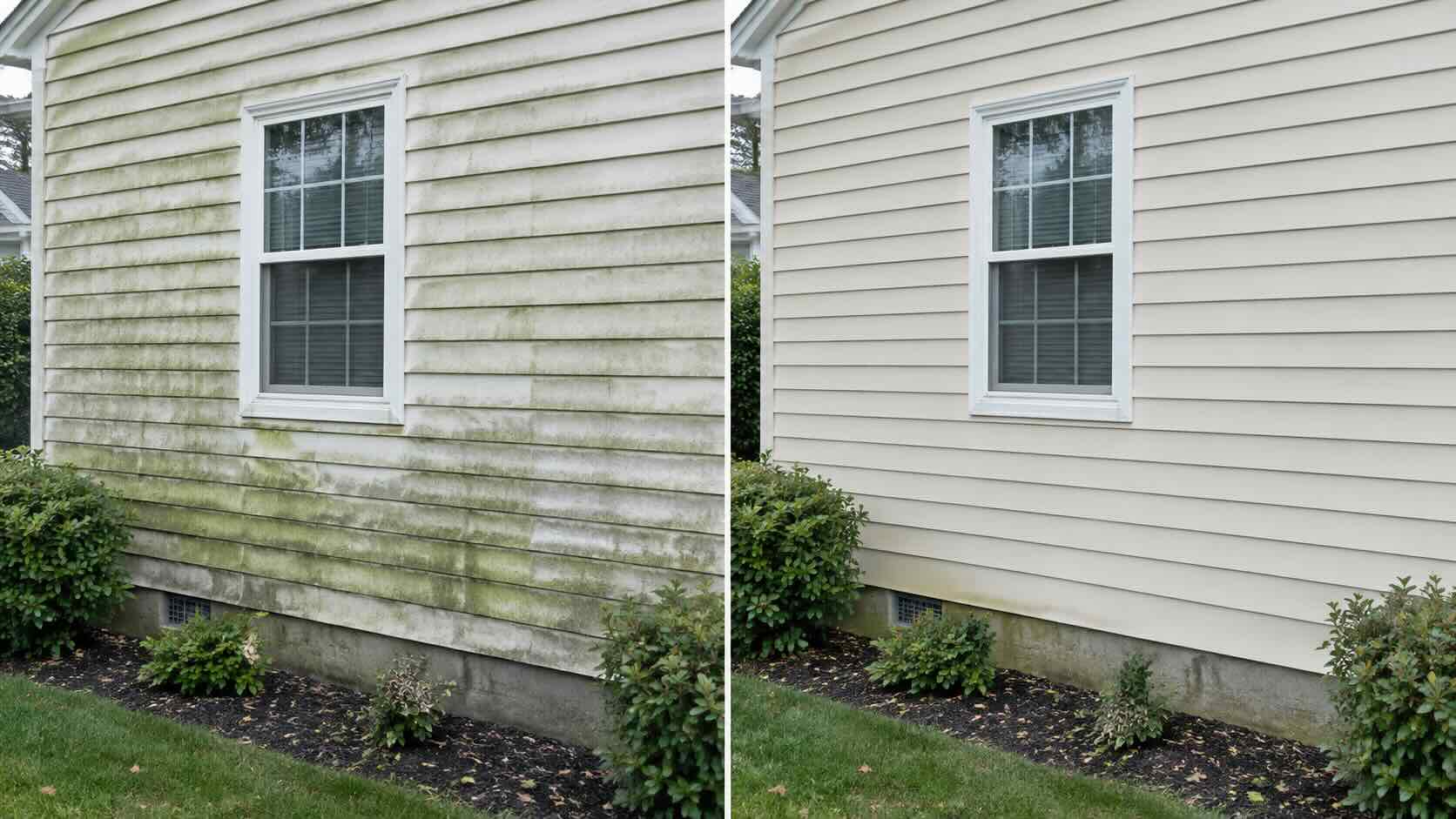
Vinyl siding cleaning in Harford County and the Baltimore area requires more than rinsing dirty walls—it takes the right treatment, controlled water pressure, and careful attention to the condition of your property.
We help homeowners, business owners, and property managers remove algae, mildew, pollen, dirt, and other exterior buildup without treating siding like a concrete driveway. Maryland Pickers Power Washing provides residential solutions and commercial exterior cleaning with methods that match the material, the staining, and the surrounding property.
A green wall behind your garage, streaks beneath office windows, or a dull film across a townhome building can all call for different decisions. This guide explains what we look for, how professional cleaning works, what customers should prepare, and where washing ends and maintenance begins.
Why Vinyl Siding Gets Dirty Around Harford and Baltimore County
Exterior buildup rarely spreads evenly. One wall may look clean while another develops green patches beneath windows or dark staining behind landscaping. The difference often comes down to sunlight, moisture, airflow, and nearby sources of debris.
Our work with vinyl siding cleaning in Harford County and the Baltimore area starts with those conditions. We assess where buildup appears and how the property’s surroundings contribute to it before choosing a cleaning method.
Shade, Humidity, and Slow-Drying Walls
Shaded siding often stays damp longer after rain. Mature trees, dense landscaping, roof overhangs, and limited airflow can encourage algae and mildew, particularly on walls that receive little direct sunlight.
A wooded property near Forest Hill or Churchville may experience different staining patterns than a home in an open neighborhood. Even on the same building, exposure can change substantially from the front entrance to the rear wall. We account for these differences rather than assuming every elevation needs identical treatment.
Pollen, Road Film, and Everyday Dirt
Not every dirty wall has heavy organic growth. Spring pollen, airborne dirt, soot, insect residue, cobwebs, and soil splash can leave siding looking dull without producing obvious green patches.
Buildings near vehicle activity may also collect road grime. Lower siding can show splash-back around landscaping or downspouts, while sheltered areas beneath porches accumulate residue that rain does not readily rinse away. Identifying the buildup helps us select an appropriate treatment instead of applying more pressure to every stain.
What Professional Vinyl Siding Cleaning Actually Includes
Professional vinyl siding cleaning in Harford County and the Baltimore area involves assessment, preparation, treatment, rinsing, and a final review. The equipment matters, but the decisions surrounding its use matter just as much.
We consider the siding’s condition, visible contamination, nearby plants, drainage, windows, exterior electrical features, and access. A successful cleaning plan addresses the whole work area—not just the most noticeable patch of algae.
Checking the Siding Before Cleaning
We look for conditions that could affect the work, including damaged siding, loose trim, questionable window seals, open vents, and sensitive exterior fixtures.
Cleaning does not repair those problems. If a section needs attention before washing, the sensible response is to recognize that limitation rather than spray through it. An initial assessment also helps distinguish removable surface buildup from permanent discoloration or material deterioration.
Defining the Scope Clearly
“Wash the building” can mean different things to different people. A siding-cleaning request should identify which walls and associated features belong in the project.
Possible areas to discuss include:
- Front, rear, and side elevations.
- Siding around porches and recessed entrances.
- Trim, shutters, soffits, and fascia.
- Areas beneath window ledges and behind downspouts.
- Accessible exterior columns and porch ceilings.
- Separate structures or shared community buildings.
We also clarify whether sidewalks, patios, roofs, or gutter exteriors require separate cleaning. These surfaces may need different methods, and customers should understand the scope before work begins.
Why Soft Washing Makes Sense for Vinyl Siding
For vinyl siding cleaning in Harford County and the Baltimore area, the goal is effective cleaning with appropriate control—not maximum pressure.
Our residential cleaning guidance distinguishes lower-pressure washing for siding from pressure-based cleaning for durable surfaces such as concrete. Soft washing combines suitable cleaning solutions with lower pressure and a measured rinse. The treatment loosens and addresses buildup so water can remove it without relying on aggressive force.
Cleaning Solutions Do Much of the Work
Organic growth needs more consideration than loose dirt. A cleaning solution can treat algae and mildew while helping loosen the residue attached to siding.
We select the process according to the material and visible condition. Pressure, treatment, rinsing, and any additional attention must work together. Applying one setting across siding, painted trim, masonry, and concrete ignores the differences between those surfaces.
More Pressure Can Create More Problems
Excessive pressure can force water behind siding, affect window seals, strip paint from nearby surfaces, and produce damage elsewhere on the exterior.
That is why soft washing is an important part of a surface-specific house-washing approach. We evaluate the building before choosing the method instead of treating a powerful spray as the answer to every cleaning problem.
Professional vinyl siding cleaning in Harford County and the Baltimore area should leave the property cleaner without creating avoidable maintenance issues. Careful technique matters around siding seams, windows, trim, and other vulnerable transitions.
What Cleaning Can Remove—and What It Cannot
We set realistic expectations for vinyl siding cleaning in Harford County and the Baltimore area because not every mark is ordinary dirt. Two stains that look similar from the driveway may have different causes.
Routine exterior power washing can address many common contaminants, including:
- Green algae and mildew.
- Pollen and airborne dirt.
- Cobwebs and insect residue.
- Road grime and soot.
- Soil splash and general surface film.
The appropriate treatment often improves the appearance considerably, but cleaning cannot reverse every kind of discoloration or physical damage.
Oxidation and Permanent Discoloration Need Separate Consideration
Oxidation, rust, mineral deposits, aging-related discoloration, and damaged finishes may not disappear through standard washing. Some conditions require specialized treatment; others call for repair or replacement rather than additional cleaning.
We explain those distinctions before beginning. Repeatedly increasing pressure because a mark remains is not a responsible substitute for understanding what caused it.
Recurring Stains May Point to Another Maintenance Issue
A wall that repeatedly becomes dirty beneath an overflowing gutter or downspout deserves more than another wash. Cleaning can reveal drainage patterns, deteriorated sealant, damaged trim, and other concerns that grime previously concealed.
We treat washing as part of property maintenance, not a replacement for it. Correcting a recurring source of moisture may matter as much as removing the visible buildup.
Residential Vinyl Siding Cleaning: Homes, Townhomes, and Rentals
Homeowners arrange vinyl siding cleaning in Harford County and the Baltimore area for different reasons. Some want to remove obvious algae. Others are preparing for listing photographs, addressing an association maintenance request, or cleaning up before an outdoor gathering.
We approach each home according to its materials and exposure. A detached house with landscaping against the siding presents different access considerations than a townhome with a narrow rear yard or shared pedestrian areas.
Look Beyond the Front of the House
The street-facing wall may receive the most attention, but heavier growth often develops elsewhere. Rear elevations, shaded side yards, porch recesses, and areas behind shrubs deserve inspection too.
We pay attention to overlooked locations such as siding seams, foundation edges, spaces beneath window ledges, and areas near utility boxes or hose spigots. These details help produce a more consistent result than cleaning only the most visible wall.
Coordinate Other Exterior Work Thoughtfully
Siding washing can form part of a broader residential cleaning visit. Driveways, walkways, patios, decks, fencing, and roof surfaces may also need attention.
Combining requests does not mean using the same process everywhere. We assess each surface separately and distinguish cleaning from work such as gutter service, painting, sealing, drainage correction, or repairs. That keeps the project practical and prevents customers from expecting washing to solve unrelated maintenance problems.
Commercial Vinyl Siding Cleaning: Planning Around People and Property Use
Commercial vinyl siding cleaning in Harford County and the Baltimore area requires coordination as well as cleaning knowledge. Office buildings, rental properties, apartment communities, and other facilities may have occupants, deliveries, customers, or maintenance staff moving through the work area.
We provide exterior cleaning for offices, retail storefronts, warehouses, restaurants, apartment complexes, and other commercial facilities. The surfaces and scope vary by property, so we assess the actual building rather than assuming every commercial site has the same needs.
Keep Entrances and Work Areas Organized
A commercial cleaning plan should account for doorways, sidewalks, vehicle access, hoses, drainage, and the movement of people around the building.
We work with customers to minimize disruption and can discuss off-hours, early-morning, or weekend scheduling when needed. The aim is an orderly project that fits the property’s operating schedule, not cleaning that leaves staff improvising around an unexpected work zone.
Separate Siding Work From Other Commercial Cleaning
Building walls, sidewalks, loading areas, and dumpster pads can collect very different contaminants. A siding wash should not automatically include every exterior surface, nor should those surfaces automatically receive the same treatment.
We define the requested work and consider nearby storm drains, surface slopes, and the material being removed. Runoff planning deserves particular attention where grease, sediment, or other heavy contamination affects the cleaning area.
Good vinyl siding cleaning in Harford County and the Baltimore area gives property managers a clear scope, practical preparation requirements, and a schedule that reflects how people use the site.
Cleaning for HOAs and Multifamily Communities
Community-wide vinyl siding cleaning in Harford County and the Baltimore area involves repeated buildings, shared spaces, and many individual households. Coordination can determine whether the project runs smoothly.
We review access, parking, resident notices, common entrances, sidewalks, and any amenity areas affected by the work. Residents need time to close windows, secure pets, and move belongings away from scheduled cleaning zones.
Establish a Consistent Building Scope
Association boards and property managers should identify which buildings and elevations need service. They should also distinguish association-maintained areas from surfaces that require separate authorization.
A consistent scope helps avoid the uneven appearance that develops when heavily stained buildings receive attention while similar nearby structures remain untouched. We can discuss recurring maintenance alongside one-time cleaning so the plan reflects the community’s actual condition.
Communicate Access Requirements Early
Narrow passages, fenced patios, locked gates, resident furniture, and parked vehicles can affect access. Advance communication gives residents clear instructions and reduces avoidable delays.
We also coordinate around resident movement and shared facilities. A building-cleaning project should account for the people living there, including when particular entrances or nearby spaces may need temporary restrictions.
How Often Should Vinyl Siding Be Cleaned?
We generally use annual exterior cleaning as a starting point when discussing vinyl siding cleaning in Harford County and the Baltimore area, then adjust the recommendation to the property.
Our residential guidance notes that many homes benefit from yearly cleaning. Properties with persistent shade, substantial tree cover, damp conditions, heavy pollen, or recurring algae may need attention more frequently, sometimes around every six months. These are planning guidelines, not mandatory schedules.
Let Visible Conditions Guide the Timing
Look for green growth returning on shaded walls, a noticeable film across siding, or staining that consistently follows moisture exposure. Those observations are more useful than choosing a date without examining the building.
We also consider upcoming property events, such as listing photography or exterior maintenance. Cleaning can make the building easier to evaluate, but it should fit around any repairs that need to happen first.
Consider Seasonal Sources of Buildup
Spring pollen, summer humidity, and fall leaf residue can affect exterior conditions differently. A useful maintenance schedule responds to what the property actually collects.
There is no reason to assume neighboring homes need identical timing. Tree cover, sunlight, drainage, traffic exposure, and building condition all influence the cleaning plan.
How to Prepare for a Professional Cleaning Visit
A little preparation makes vinyl siding cleaning in Harford County and the Baltimore area easier to coordinate. We review access and property concerns before the visit so customers know what needs attention.
For homes and commercial buildings, useful preparation includes:
- Closing windows and doors securely.
- Clearing fragile décor and personal belongings from work areas.
- Moving furniture, rugs, toys, and planters where practical.
- Securing pets away from active cleaning zones.
- Providing access through gates or restricted areas.
- Confirming water availability.
- Identifying loose siding, leaking windows, or damaged trim.
- Discussing sensitive landscaping and drainage concerns.
Move vehicles when they obstruct access or when adjacent driveway cleaning forms part of the project. For managed properties, communicate parking and access instructions to residents or staff beforehand.
Tell Us About Existing Problems
We want to know about issues you have already noticed, including water leaks, loose exterior features, or a particular area that requires caution.
You do not always need to remain on-site if we have the necessary access, water source, and instructions. Clear arrangements matter more than your physical presence throughout the visit.
Why Professional Service Is the Better Choice
Professional vinyl siding cleaning in Harford County and the Baltimore area brings together surface assessment, equipment selection, treatment knowledge, rinsing technique, and property preparation.
Renting a pressure washer supplies a machine. It does not determine which method suits aged siding, how to work around questionable seals, or whether a dark mark needs something other than ordinary washing. Incorrect pressure-washer use can damage siding, wood, paint, windows, landscaping, and other exterior materials.
We choose professional methods because siding cleaning involves more than reaching a wall and making it look brighter. The work requires judgment about the material, contamination, surrounding features, and limitations of the service.
Customers should ask how a provider selects pressure and treatments, protects nearby areas, handles existing damage, and explains expected results. Specific answers reveal more than a promise to “blast everything clean.”
Our Service Area and Scheduling Information
We handle residential and commercial exterior cleaning throughout Harford County, including Bel Air, Fallston, Forest Hill, Abingdon, Churchville, Havre de Grace, Edgewood, Aberdeen, Belcamp, and Riverside. Our published service areas also include Perry Hall.
For vinyl siding cleaning in Harford County and the Baltimore area, we confirm availability using the actual property address. A town name or ZIP code alone does not establish whether a particular location falls within our working area, especially near county lines or beyond listed communities.
When contacting Maryland Pickers Power Washing, describe the building, the siding condition, and any access requirements. You can call 443-206-1859 to discuss residential or commercial cleaning and arrange the next steps for your property.
FAQs About Vinyl Siding Cleaning in Harford County & the Surrounding Areas
Is soft washing safer than high-pressure washing for vinyl siding cleaning in Harford County and the Baltimore area?
For siding, we generally select a lower-pressure method with appropriate cleaning solutions rather than relying on aggressive water pressure. The solution treats and loosens buildup, and controlled rinsing removes residue.
Excessive pressure can force water behind siding or affect nearby windows, paint, and trim. We assess the siding and surrounding features first because low pressure alone does not eliminate every concern. Existing damage, loose components, and questionable seals still need attention before cleaning proceeds.
How often do you recommend vinyl siding cleaning in Harford County and the Baltimore area?
We commonly begin with an annual cleaning guideline and adjust it according to visible buildup and exposure. Shaded properties, heavily wooded sites, and buildings with recurring algae may need more frequent attention; our residential guidance notes that a six-month interval can make sense in some conditions.
We do not recommend extra washing solely because a calendar interval has passed. We look at the siding’s condition, how quickly staining returns, and whether moisture or drainage issues contribute to the problem. Cleaning frequency should follow those observations.
Can you remove every green patch, black streak, or chalky mark from vinyl siding?
We can address many common forms of algae, mildew, dirt, pollen, and surface grime. However, appearance alone does not reliably identify the cause of a mark, and standard washing does not remove every kind of discoloration.
Oxidation, rust, mineral deposits, aging-related changes, and physical deterioration can require a different response. We evaluate visible conditions and explain the expected result before cleaning. If a mark remains because of damage or permanent discoloration, additional pressure is not an appropriate solution.
What should property managers arrange before commercial or multifamily vinyl siding cleaning?
We need a defined scope, access arrangements, and a schedule that accounts for the people using the property. Managers should identify the buildings and surfaces involved, discuss water availability, and explain parking restrictions or other site rules.
Residents or occupants may need notice to close windows, move outdoor belongings, secure pets, and keep designated work areas accessible. We also review entrances, shared sidewalks, drainage, and traffic patterns. These arrangements help us plan the work without treating an occupied property like an empty job site.
What happens if you find damaged siding or leaking windows before cleaning?
We consider existing damage during the assessment and discuss how it affects the proposed work. Loose siding, damaged trim, deteriorated seals, and leaking windows can require caution, a scope adjustment, or repairs before an affected area receives cleaning.
Washing does not repair the exterior or correct a water-entry problem. We distinguish removable buildup from maintenance concerns and explain relevant limitations. The appropriate sequence depends on the condition: some surfaces can receive careful cleaning, while others need the underlying problem addressed first.

0 Comments